Even as someone who dedicated much of his life to increasing LGBTQ+ visibility in sport, Jack Murley did not realise how much he needed an inclusive space of his own.
The broadcaster has spent years helping others share their stories of representing the community in sport, but one such interview would hit a little closer to home than he intended.
When the Cornwall Football Association got in touch about coming on to the podcast to discuss their intention to start up an LGBTQ+ club in the area, it seemed obvious to them to ask Murley to get more involved.
Murley had come from a sporty family, but had not regularly participated in football since he was a child – instead focusing on his efforts in the commentary booth and covering the game.
Stepping back on to the pitch himself, with a club that he could not have even imagined the last time he played five-a-side football semi-regularly, meant that suddenly Murley got to experience first-hand with Stargazy FC exactly what literally hundreds of people have been telling him over the years.
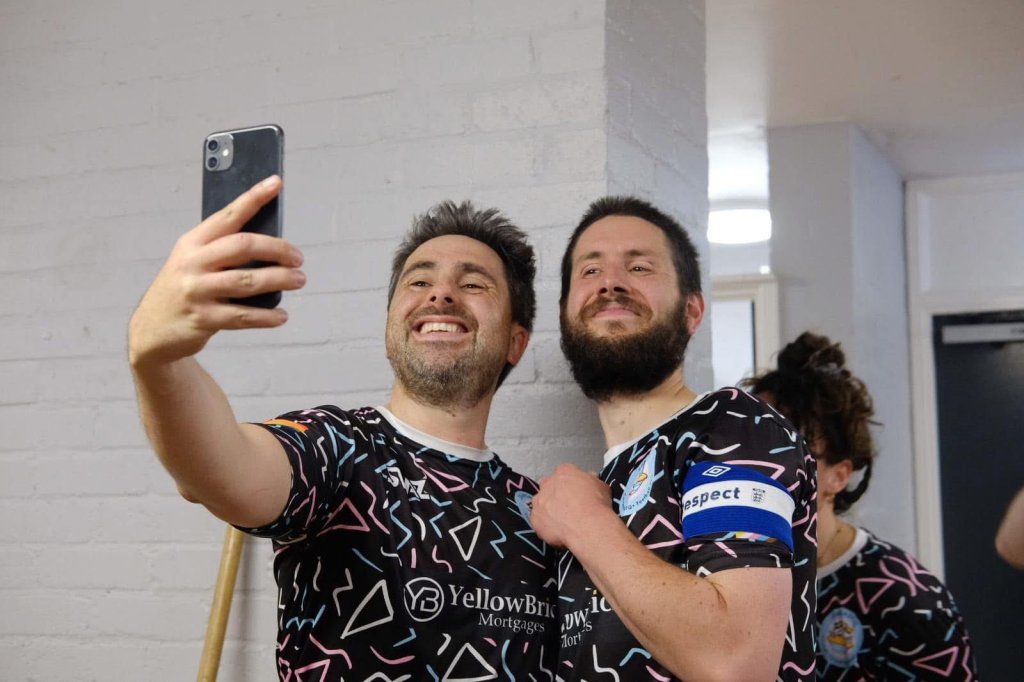
“It’s interesting, because I think I knew instinctively the impact that these clubs can have through the conversations I’ve had, but I didn’t know how it would make me feel,” Murley explained.
“I didn’t know how much I needed that space. When you’re new at anything, you worry about being rubbish or letting people down. When you’re LGBTQ+, you worry about whether people think you’re being rubbish or letting them down because of that – which is the internalised stuff that we all have going on.
“To be able to strip all of that out was a real tonic. All of the things that people have told me – you don’t have to worry about it, you can just relax – suddenly I was feeling that it was true.
“It is a huge part of my life. The people there are some of my best mates, and we have so much fun, so I can’t imagine not having it there.
“I’m 36 and I never had anything like that before in my life living down here. The very few LGBTQ+ places you could go were bars and clubs, which aren’t my scene. I never thought there would be a football club to go to, but every Sunday that’s where I am.
“It has become my queer scene, but also my sports scene, and brought them both together in a way that I as a kid could not have fathomed.
“People must get sick of how much I bang on about how wholesome and lovely it is, and I definitely think there is a Richard Curtis film to be made about deepest darkest Cornwall having this LGBTQ+ football team from nowhere, and yet it really is that lovely.
“I didn’t know I needed it until I got it, I didn’t know I was missing it. It wasn’t like there was a hole in my life, but how amazing to have this extra thing come relatively late into my life that I didn’t know I wanted – and yet I guess maybe some part of me knew I wanted it all along, because look at what I’ve been doing for years now.”
In theory, what also comes with being part of a team like Stargazy is a support system, but Murley has become accustomed to dealing with issues on his own over the years before joining the club.
Having interviewed some of the top athletes in the world, LGBTQ+ or not, he has gained some level of notoriety. With that, he has become a target for abuse.
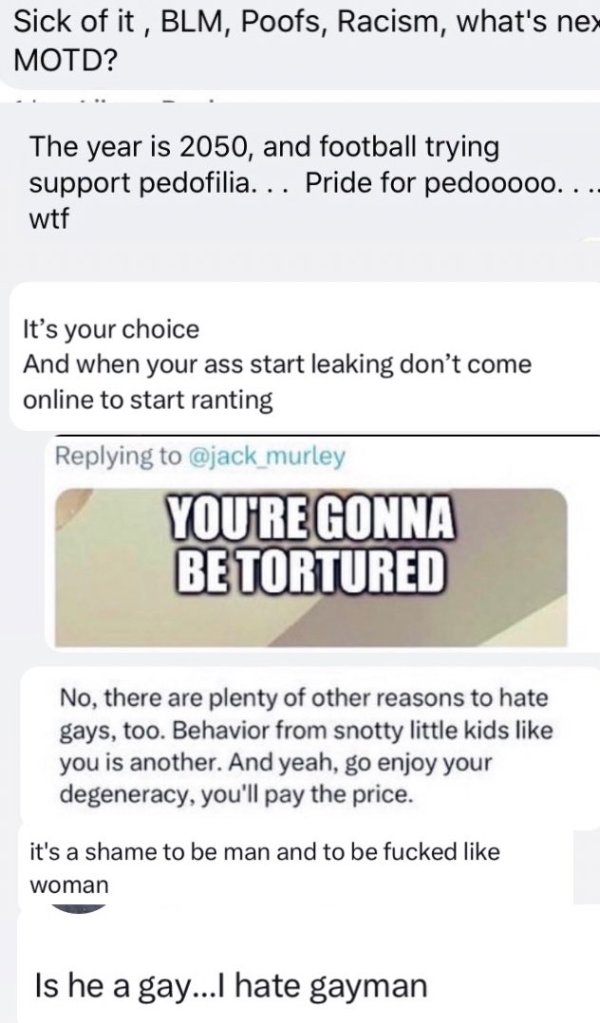
Sometimes, rather than sweeping it entirely under the carpet and internalising the impact, he calls out the ridiculousness of the abuse he gets on social media, making light of the approaches some choose to take to try and tear down LGBTQ+ visibility.
However, he says that those are often just the tip of the iceberg of what he receives.
“I won’t give a ratio, but for every one I share there is a significant amount that I don’t,” he said.
“I get sent an awful lot. People talk about it just being tweets – this year I have had stuff sent to the club. Someone went to that trouble. I have had stuff sent to places of work too.
“My process in dealing with it is a lot of dark humour. I make jokes out of it, that’s what I do, but I try and go to the gym – which sounds stupid, but I find that moving heavy things from place to place helps me switch off.
“You just have to deal with it. It’s not a good answer, but I find that I don’t want to burden other people with it, because I’m used to it. It’s terrible to say but I am so inured to what I get that you can’t pour any more in. Let’s not tempt fate, but there’s nothing else that I could be sent that would shock or surprise me. The worst of the worst has been sent to me, so I’m pretty numb to it.
“I don’t ever want to sit down with my parents more than I have to and say ‘guess what horrendous images I was sent today’, or ‘guess what people want to do to your son’. I can cope with it, but it hits other people differently.
“I don’t think I’ve ever had a properly honest conversation about how much it can hurt, and how much of an impact it can have, because I don’t want other people to have to feel that.
“Some are just so stupid and daft, it’s almost funny – not in a ‘ha ha’ way, but I can find humour in that. It takes some power back. The thing that they hate about me is how I love, so let’s make a joke out of it and say how stupid that is.
“I’m unapologetic about it, which sounds quite grandiose, but I just am me. I’m quite obviously someone who is gay, who likes being gay and who likes making jokes about people who don’t like me for being gay, and that rubs people the wrong way.
“There’s no alternative. I’m not going to stop doing my job. I can’t stop being gay – I wouldn’t if I could, it’s quite fun – so what’s the alternative? There isn’t one.
“I’m a big believer in controlling the controllables. I cannot control how other people react to me, but I can control how I react to them, and I’m never going to live inauthentically again. Once I came out I was never going back in. I was never going to let people make me feel like I can’t be me, and if they don’t like that then so be it.”
If anything, Murley’s visibility has only increased since he left the BBC, and the BBC LGBT+ Sports Show in effect became the Jack Murley Sports Show.
Although there were no guarantees that he would still be able to get the level of guests he had been booking after striking out on his own, or that his listenership would migrate over with the new branding, the change has been an unqualified success.
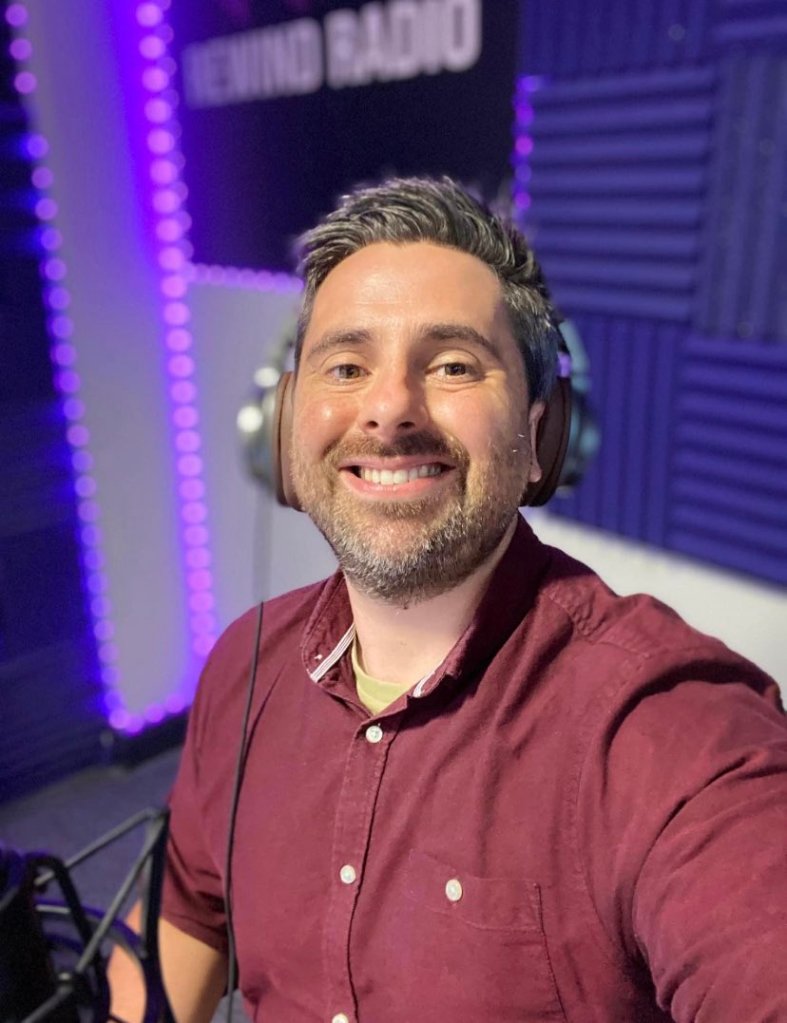
With any new era, though, comes a chance for some reflection, and Murley has around 350 podcast episodes sharing LGBTQ+ stories in sport to look back on with an immense amount of pride.
“I don’t know what I would do if I didn’t have the podcast – it has been years of me talking to people, so I would become unbearable if I didn’t have people to talk to in sport or on a podcast,” Murley laughed.
“I’m proud of all of it, but one of the things that stands out is that it hasn’t just been a podcast. It has become television pieces, documentaries, lighting up Wembley in pride colours and offers to host this or that.
“Lighting up Wembley in Pride colours at last year’s FA Cup final was amazing. I really felt the pressure that day, because they had the Coldstream Guards in there rehearsing and they told me I had this window to do my piece to camera and go down this row of LGBTQ+ fans, wrap it up and send it back. That was a surreal moment.
“When we first started the podcast, it was a complete unknown. We didn’t know if it would work and if people would care, and I’m still slightly disbelieving that they do. I keep waiting for it to go away. You sit and you do them, and you sometimes forget that people listen. When you get a message from someone listening in Peru, you just think ‘how? How have you found us?’
“We’ve been really lucky with guests. Stephen Fry is one of those people where you’re waiting in the Zoom call, and the screen is black but then suddenly it’s a national treasure sitting there. He was everything I wanted him to be.
“I will say, Jakub Jankto was the most humble, down to earth, lovely guy who had just done this amazing thing in sharing his story. He’s the highest profile footballer in the men’s game to come out, and he was the easiest person to speak to and arrange to have on the podcast. He was doing it in his third language, and he was just a dream, an absolute delight. That was great, that meant something.
“It’s just the fact that these are people who have accomplished so much in their lives, and they’re willing to chat and open up about really personal things. Anyone who has come out will know, even if they had a great experience, that it’s not always easy and it’s not always something that goes well. The fact that people are willing to talk about that and joke around, that is the joy.
“I’m loathe to pick one person out in particular that I still want to have on the podcast, but we still haven’t got Tom Daley yet. I think he’s a great white whale, I think I have to put my dreams away on that. We’ve come close a few times, but that hasn’t quite come off.
“The closest we got to Elton John was knowing he had listened to an episode, that was a cool moment. We had Osian Jones, the hammer thrower from Wales on, and Elton read the article and listened to a bit of the podcast and then phoned Osian. I feel like that’s two degrees of separation from Elton being on the pod.
“The really amazing thing is that we haven’t run out of people. So many people are coming out and sharing their stories from different walks of life and in different ways. We’ve got so much to keep us going, and that is almost the most amazing thing.
“There are things I’ve learned from doing the podcast that I guess I knew intuitively were true, even away from the LGBTQ+ side of things.
“I’ve learned that Olympians get sad after the Olympics. You know the story ends, but you don’t really know the story ends until you hear so many athletes say there is a post-Olympic blues.
“I’ve learned how much not being your true self can impact on elite athletes when it comes to performance, and the nth of a degree between winning gold, or not qualifying for the Olympics.
“As an interviewer, I’ve learned there is value in what we do. I have seen other people adopt a similar approach to what we do. I don’t mean that as a criticism, I think that’s great, but one of the reason I started doing this is because I was sick and tired of LGBTQ+ sports stories being told once a year and focusing around being gay being terrible.
“Maybe it’s a role we’ve played, maybe it’s just the way society is going, but I think there is a more considered, more grounded and more real telling of LGBTQ+ experiences in sport, and I would like to think we’ve been a part of making that happen.”

Another highlight for Murley since the last time he was featured on Pride of the Terraces is his move into wrestling commentary.
A life-long fan of the art-form, it would be a cliché to say that getting behind the announcing desk on a show night has been a dream come true, but it is also difficult to describe it in any other way.
The industry has become exponentially more queer in recent years, with Pride shows popping up either side of the Atlantic and so many wrestlers coming out that there is an annual top 200 ranking released.
As far as LGBTQ+ athletes go, wrestling has become one of the spaces where they are most commonly found, and for Murley that is a definitive sign of progress.
“I’m very happy within my life a lot of the time, but I don’t think I’m ever much happier than when I’m behind the commentary desk calling professional wrestling,” he added.
“I would say it’s the thing I was put on this earth to do, and I don’t get to do it as much as I’d like but man, when I get to do it, it never fails to make me as happy as I’ve ever been. I love losing myself to the performance of it, and I love buying in.
“When actors sometimes say they give everything to a role – when I go and sit at a commentary booth, I give everything to it. Not in a conscious, pretentious way, but something in my body can’t hold back because I am so invested. I just think it’s the best thing on earth.
“I think a lot of my commentary that I’ve done on sport that isn’t pro wrestling has borrowed from pro wrestling, and there’s no shame in that. Pro wrestling is very simple story-telling, and journalism – while telling the truth – is seeing what’s unfolding in front of you and figuring out what the simplest story to tell is, particularly in my medium of radio.
“I felt like that gave me a great basis for when I did get the opportunity to do pro wrestling commentary. That, and years of idolising Jim Ross, meant I was there and ready.
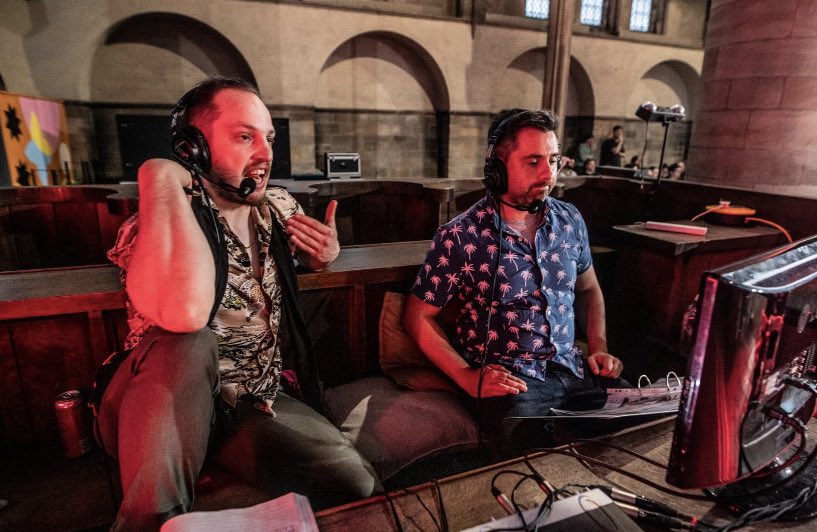
“I could never have imagined growing up that I would be doing commentary for a Pride pro wrestling show, because back then the UK scene wasn’t what it is now. I’m old enough to remember a pre-internet age where there wasn’t streaming, so those opportunities just did not exist.
“Now you’ve got so many amazing promotions – True Grit, WAW, the list goes on and on – where you can see amazing wrestling all year round. When they put on shows and need commentators, I’m lucky enough to be considered for some of them, and I like nothing more than when the match starts and the wrestlers are telling their stories, and I’m trying to enhance it.
“Nothing gives me a buzz more than when a wrestler comes to me and tells me they like what I did. They are putting their bodies on the line, so when a wrestler comes to me and tells me they like what I did with their story, that’s everything to me.
“I think it’s really encouraging to see how the industry has progressed. With the Pride shows, which are predominantly what I’ve commentated on, there was a point where if you were gay enough, you were good enough. The approach was that they had to fill a card, so the focus was on whether they were LGBTQ+ first and the rest later. I don’t mean that in a derogatory way, that was just the reality of the numbers around.
“Now, if you go to a Pride show, I don’t care if you are from the queer community or not, you are getting a great show. The fact that all the competitors happen to be from the community, or allies, is almost secondary.
“When I did the True Grit show earlier this year, it was one of the best environments I’ve ever been a part of – not because it was a queer wrestling show, but because it was a really good wrestling show.
“There was a point growing up where we were jokes, or comedy acts. We certainly weren’t seen as anyone who could fill buildings, sell pay-per views or put on great wrestling matches, but now that’s not questioned in the industry – and that’s arguably one of the biggest changes there has been in societal perceptions in wrestling over a short period of time. That’s not remarked upon enough.”
 Pride of the Terraces
Leave a comment