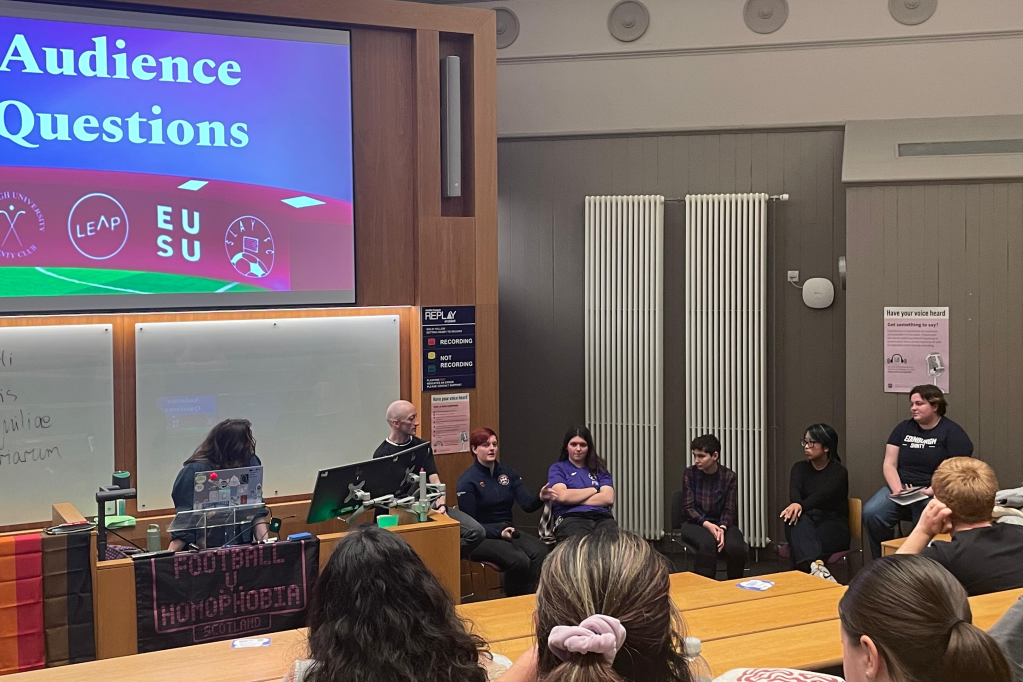
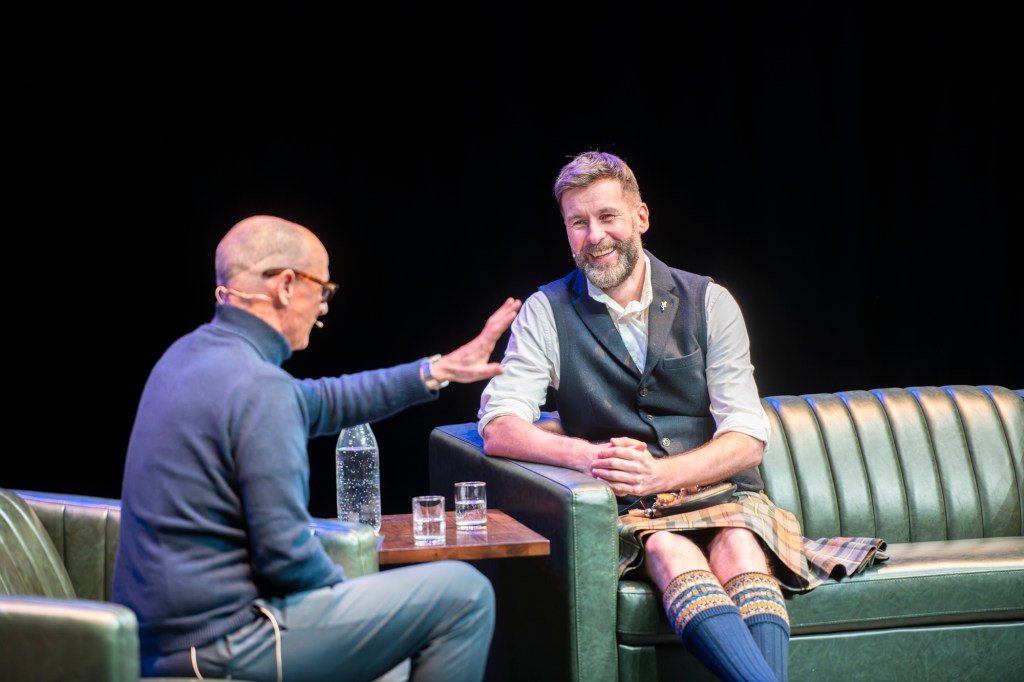
Edinburgh University’s Pride Society recently held a panel discussion on queer inclusion in sport.
The panel featured representation from the university’s sports union, shinty club, the Holyrood Hippogriffs quadball team, Leap Sports and university-adjacent football team Slay FC.
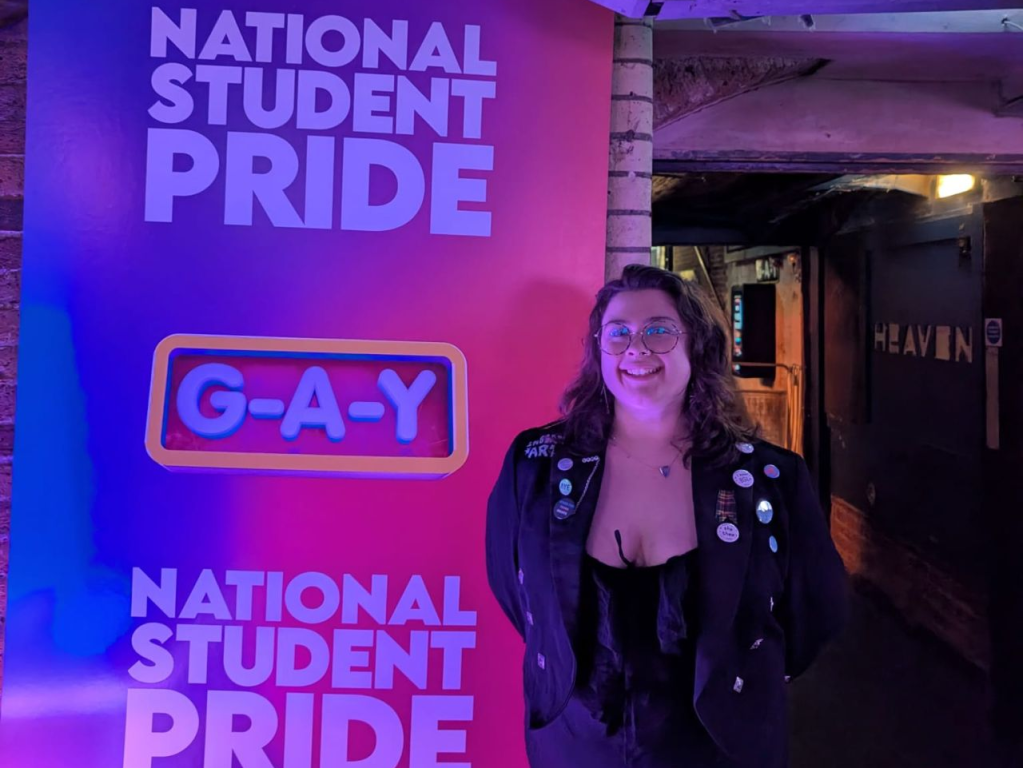
It was organised by Pride Soc president and Slay FC co-founder Poppy Watson, who says it was a chance to share ideas on how best to be inclusive – as well as serving as a reminder that no one of these groups are on their own.
“It kind of just started with me wanting to go and chat to people,” she said.
“I thought it would be nice to have a discussion so that nobody felt like they were the only club doing it, because it’s easy to think it’s just you or your group. I definitely found that.
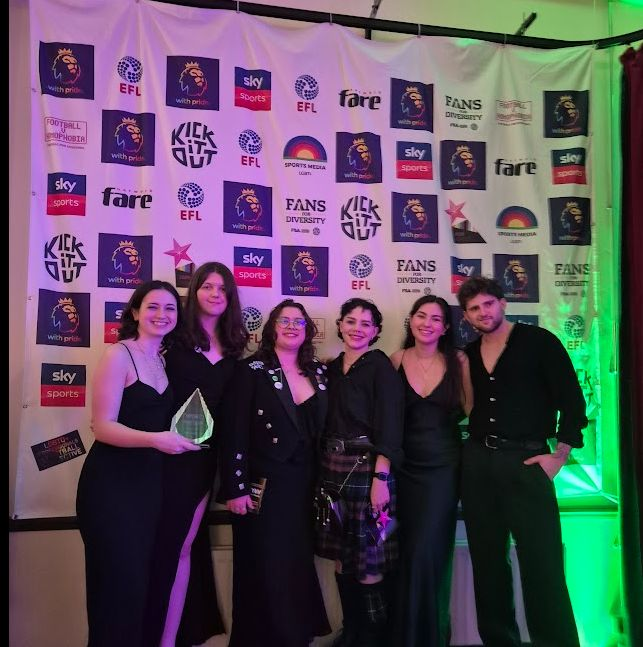
“Slay is literally just a grassroots club that started a couple of years ago, but we were shortlisted for the Football v Homophobia Scotland Award this year, and being there it really felt like we weren’t the only ones. I wanted to replicate that.
“There was loads of really lovely chat between the panellists, and some really lovely audience questions, so it was such a nice environment.
“The fact that there were so many people who were able to come together and speak, it’s a beautiful thing. So often you can get stuck in your own sport, so it’s nice to see these things happening across different groups.”
As for her panel highlights and main takeaways, Poppy continued: “We had a question about including disability in sport, which I think was probably the most interesting discussion that happened.
“There is a big intersection between queerness and disability in lots of different ways, so being able to have an open discussion about that and hear the wee things people are doing was great.
“Quadball never tells people they have to play the whole time, they can take breaks. In shinty, the way they are structured as such a big club, people kind of have to tell them what they need – which isn’t how the club wants it to be.
“Quite often I feel like there’s the idea that you have to play all the time to get involved in sport, but everyone was doing something to help people.
“I think that was my big takeaway – it’s actually not that hard to be inclusive.
“Slay is a queer team run by queer people, whereas shinty is a university team, but we are both doing inclusivity. We both allow people to feel welcome and play in whatever team they want, so a big takeaway for me was that no one club is alone, but we might not always know that.”
Although discussions at the panel did convince Poppy to give shinty a try, her main sport has always been football.
She played for Brora Rangers in the Highlands and Islands League from the age of 14 until she moved to Edinburgh for university.
At that time in her life, beginning to understand and embrace her queer identity, women’s sport was one of the few places she saw LGBTQ+ representation in everyday life in the Scottish Highlands.
“From the top down, there are so many out players who make women’s football such an inclusive environment,” she reasoned.
“There is still nobody who is out in the upper leagues of the men’s game, and I think it does make a difference to who is allowed to play in the game from the bottom up. That then affects the top down, it feeds each other.
“Living in the Highlands, I think if I was in a different position it would have been a lot harder. I’m quite privileged in myself that I felt quite comfortable, and still do.
“Growing up in Brora, there weren’t many other queer people. I’m actually going to do a PhD about queerness in the Highlands, and track that through from the late-60s until now because there’s nothing written, and no visibility.
“I was definitely starting to realise things on my queer journey, and when we would play other teams with Brora there were definitely some very obviously queer folk, which was nice.”
When Poppy had to leave Brora Rangers as she went to uni, she would attempt to keep up with football by joining the women’s team in Edinburgh.
After her first semester though, the combined costs of club, union and gym memberships alongside Bucs and kit fees forced her to give it up.
It would be a couple of years later, after going along to a rugby taster session and realising that was not for her, that the idea to form Slay came to the fore.
In the early days, it was a real team effort from a small group of friends. Poppy’s partner Jean designed the club’s logo, and would go on to design their kit, with money being raised almost exclusively from bake sales.
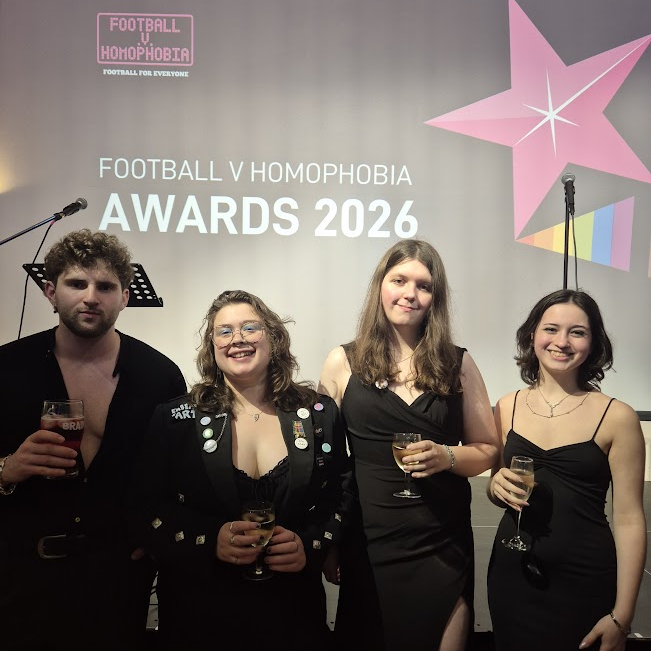
They are inclusive to all and play every Sunday in The Meadows, with numbers having grown to the point there are multiple teams’ worth of players coming along to sessions.
Poppy credits much of the growth of Slay over the last year or so to current co-ordinator Isabelle Westcott, but while there is plenty of pride at seeing what the club has become, it has also been eye-opening at times on a personal level.
“I do feel so proud watching it grow, and seeing partners starting to come along to watch and seeing everyone’s passion for it is so wonderful,” Poppy enthused.
“If this was here when I started uni, I would have found my community a lot more quickly. There are a few Highlanders here – like what? It’s beautiful, and it allows people to be comfortable being themselves.
“I’m 21, but I do feel like a proud mum. I started to feel old when all the first years came in, but it’s wonderful that something like this exists and that there’s so much love for it.
“There are people who aren’t able to come out to their families, so they can come along and get something they wouldn’t back home.
“I’ve been very lucky. Even though I’m from Brora, I come from a very supportive family who are pretty much all queer, and my mum is our number one ally. I’m aware of my privilege coming into this space, but it’s easy to forget that we’re all coming from different experiences.
“For a lot of people, Slay has almost become a chosen family. It’s a place where you don’t have to justify who you are.
“You don’t necessarily know where everyone is coming form, but coming to Slay and doing a sport, you are sometimes able to have quite serious conversations, or even a bit of gossip, while also just having a good time and kicking a ball at someone.”
Slay FC is not Poppy’s only source of community either. Edinburgh University’s Pride Society has hundreds of members, and as the president for the current academic year Poppy has become an extremely recognisable face around campus.
They run multiple events every week, with just some of their bigger efforts including a cross-university ceilidh that raised £1000 for Scottish Trans, a football tournament, an academic talk series, an art exhibition, drag events and a T for T speed dating event. Right now, focus is on an upcoming queer prom to round out the academic year.
In the same way that Poppy has seen lots of individual growth from Slay FC’s players, she has witnessed people come out of their shells through Pride Soc – and in turn seen the society provide valuable support when some people have needed it the most.
“We are one of the biggest societies on campus – we have a membership of 300 or 400 people, and our post-grad rep has a group chat with about 300 people in it,” she said.
“I’m very privileged that I have an amazing committee. They really care, and obviously I do as well otherwise I wouldn’t be doing it while I’m doing a masters degree.
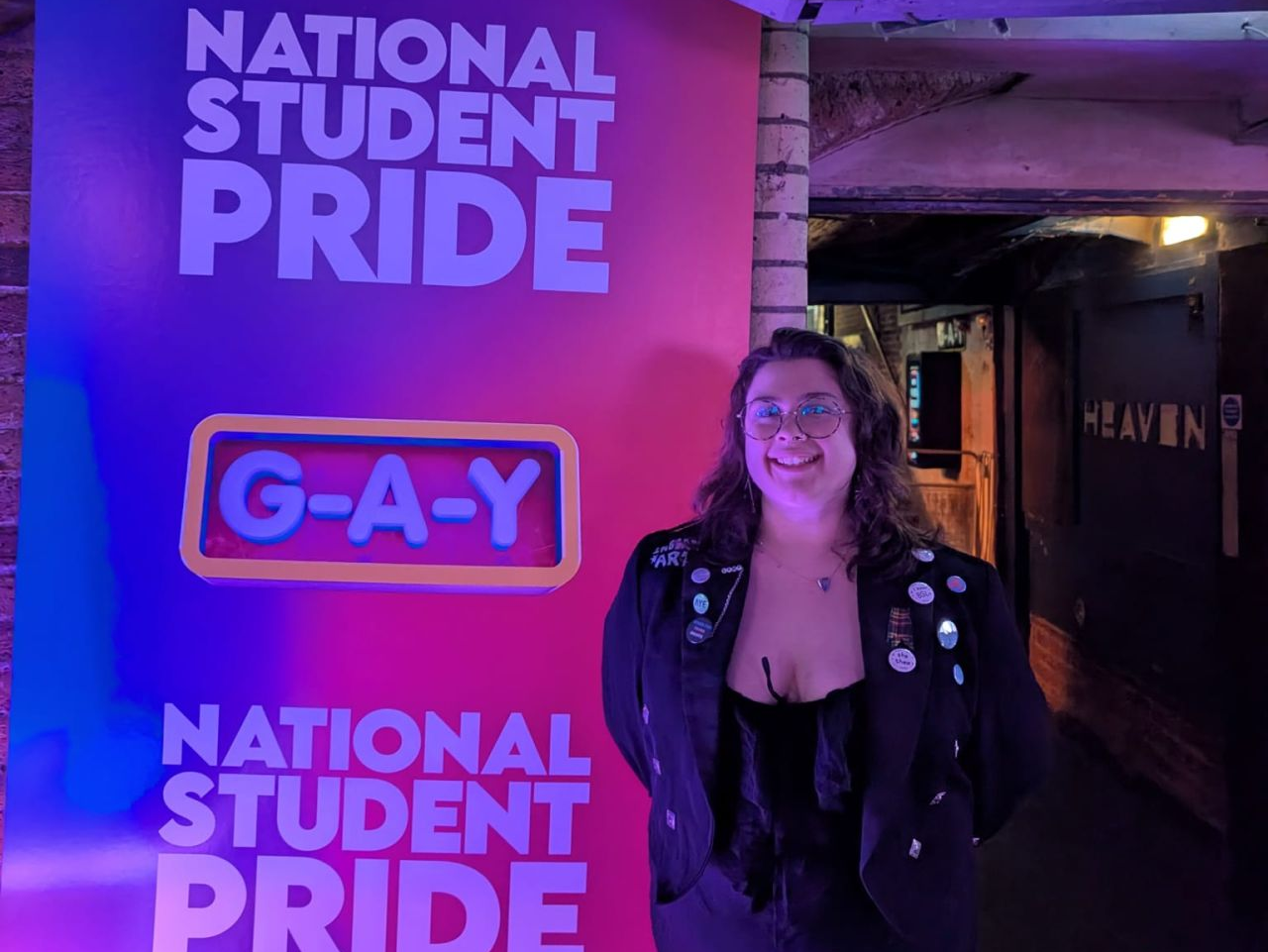
“It’s honestly brilliant, but it’s not always rainbows and sunshine. We’re in a time where our rights are literally being stripped away, so sometimes people come in really sad, and we have to figure out what we can do to help.
“At the moment, I’m definitely focused on activism, but community is also such an important, big thing.
“Going through all the stuff we’re going through right now, it’s so important to have someone by your side that you can talk to about it all, or to distract you.
“Our attendance at events has dropped off, but I actually think that’s a good thing. I’ll be walking around campus and see people who met at our events, and see that they have found their people. It’s beautiful, and very much something I wish I had more of when I started uni.
“Having a strong queer presence and resistance is so important to show people that we are here, and we’re not going to shy away – even if we’re just having a cup of tea and cross-stitching.
“Sometimes you can get bogged down in the day-to-day, and wander what the point even is, and then a wee thing happens and you realise it’s all worth it. We have created a really beautiful community, so it has honestly given me a real sense of joy and purpose.”
Having such a vibrant queer community may, on the face of it, seem like a world away from Poppy’s youth in the Scottish Highlands where visibility and representation can be scarce.
That is certainly a factor that is driving her academically, but perhaps subconsciously Poppy may have also taken something of a Highland vibe into the very queer community she has created for herself in Scotland’s capital.
“I didn’t set out to be the president of Pride Soc and set up a queer football team, that just happened, and I’m really glad it did,” she added.
“When I started doing my masters, I just felt like there needs to be more. I really want there to be something there for once so that queer history in the Highlands is preserved and remembered, and also so that people in the future can know we are here.
“If one person comes to uni and finds a community, or if in 20 years someone reads my weird research and sees themselves represented, I think that’s so worth it.
“I’m very much aware that I live in a city now, a hub where folks have gone for years and years and been able to be themselves. When I go home, I almost forget that not everyone is gay – there are barely any people, never mind gay people.
“Still, there are these moments, like my parents going along to Caithness Pride last year. If you had told me that one day there would be a Pride in Thurso, I would have just said no. Things change – things aren’t great right now, but there are these beautiful moments as well.
“Coming from the Highlands, community is such a big thing. You will walk down the street and know everyone you meet, and I’ve almost accidentally recreated that here at uni. It’s the same sort of vibe, and it’s a very Highland thing.”

 Pride of the Terraces
Leave a comment