People who want to enrich their lives often turn to sports, with countless choices available that provide an opportunity to build fitness and make friends.
To the average person who naturally wants to avoid physical conflict, combat sports are often placed in the ‘give a wide berth’ category.
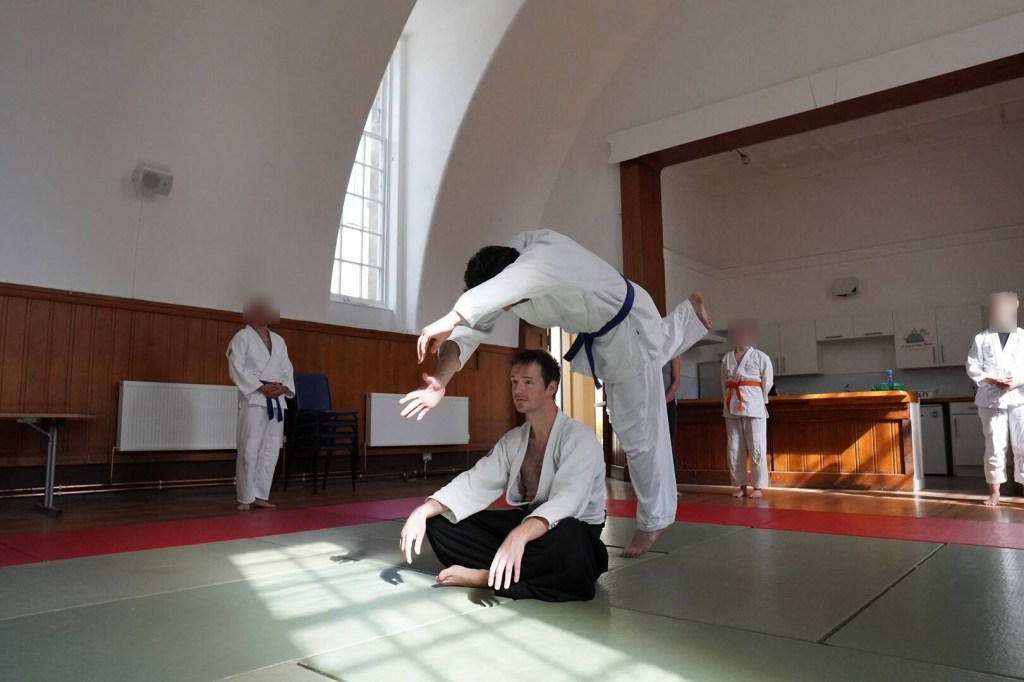
At first it was no different for Ben Reynolds, but now he is an instructor at Edinburgh Jitsu – the martial arts club that he has been a part of since the early 2000s following its founding in 1996.
After getting past his initial uncertainty, what he found was a lifelong hobby, and something to throw himself into outside of his career as a doctor.
“I’m a children’s kidney specialist in Glasgow – jiu-jitsu is a hundred percent my hobby,” he said.
“I got into it as I was getting close to graduating. I didn’t really have anything that would serve as a way to de-stress. I obviously liked going to the pub with my pals, going for a dance and things, but there was nothing I could really do after a harsh night shift.
“You can’t really go to the pub at 10am. I needed to have something else that lets me de-stress, and in my first year at uni my flatmates joined this martial arts club.
“I thought ‘that’s definitely not for me’. I’m not about violence, I’ve got no strength, I’m a complete wimp, running away is definitely the best form of defence, all of this stuff. I had no interest whatsoever.
“In the second year of uni, those flatmates moved in with the girlfriend of the guy who ran the club. I got to know him, and he really wasn’t that scary after all.
“Fast forward a couple of years, I was graduating and needed something to do. I decided to give it a try to see what it’s like and fully expected to hate every second of it.
“The first time I did it, not even an hour into the session I was convinced I didn’t like it because I’m just not a physical person.
“We were doing this thing where somebody grabs you and you do a wrist lock on them to get out of it. I was training with this guy who was about six foot four, six foot wide, with a shaven head and covered in tattoos – the type of person I spent my entire life crossing the street to get away from.
“I did the lock we were taught and he just dropped to his knees, immediately tapping in pain. That was me hooked, because it was something that worked for me as someone who’d never really been physical at all.
“It didn’t depend on strength, it just depended on how I moved my body. The fact that it worked against someone who I generally would have been scared of just absolutely clinched it for me. That’s why I’ve done it ever since.
“I’ve probably done it more than I should. I always run away from work early to get to training. I even remortgaged my own home so I could buy a building to serve as a training hall, which was definitely not a wise financial decision.
“I just really, really enjoy what I do. I love being able to share that passion with other people.”
Edinburgh Jitsu teaches a style of martial art that emphasizes being aware of your actions at all times. This is applied to an array of self-defence scenarios.
The longevity of the club is a real point of pride for Ben and all involved at Edinburgh Jitsu. He has been in charge of the dojo as chief instructor since the early 2010s, and continues to pass on his knowledge and experience to new and existing members.
The types of situations members are taught to defend themselves in can be harrowing when faced in the real world, but Ben’s experience in over 20 years of his martial art has helped him build a comfortable environment for people to learn to handle these difficult moments.
He continued: “I wasn’t there from the very beginning. My instructor set it up in 1996 and I started training with the club in 2001.
“I took over the running of the club in 2011 or 2012 when my instructor moved down south and never came back. He was originally meant to go for a year and he told me to babysit the club while he was away, but 15 years down the line, here I am still doing it. I do love it.
“It’s generally the nature of these things that clubs come and go, so I’m very proud of the fact that our club has been a consistent feature in the Edinburgh community for such a long time.
“We have our ups and downs – there have been years where we’ve had 50 to 60 members consistently coming with 20 people constantly on the mat.
“We recently changed location though which always impacts our membership, so we’re in a quieter phase at the moment.
“We advertise ourselves as a self-defence class. You probably do have to come regularly for five years before your self-defence is remotely up to scratch.
“Our style is called Shintai Wa Ryu. Ryu means ‘school’ and Shintai Wa is the union of body and mind. It’s emphasising the fact that it’s a physical martial art that we do, but also we think about what we’re doing.
“There’s a lot of stuff that you can do in self-defence that isn’t physical at all, but it still helps diffuse situations.
“The focus is on people who use street weapons rather than ancient Japanese weapons. A proportion of people who come to the club will come because they’ve been attacked or they’ve been in a situation where they felt really unsafe, and they’ve come to try and learn what to do about that.
“Part of my job as the chief instructor is to make sure that I am watching those things, making sure that everyone’s comfortable doing what they’re doing, and looking out for signs that maybe something’s happening or that somebody isn’t comfortable.
“There are drills where someone is climbing on top of you and we teach you how to get them off you. People go, ‘well, that’s Brazilian Ju-Jitsu, it’s just grappling.’ Fundamentally though, that can be applied to how a woman might defend herself against an assailant.
“For women who’ve been in that situation, it can be a very difficult and triggering event.
“Part of the club is always checking that people are comfortable with what they’re doing, emphasising that if we’re doing something that might be uncomfortable, you don’t have to do this. You can always go off, have a glass of water, tap out for five minutes and then we’ll move on to something else.”
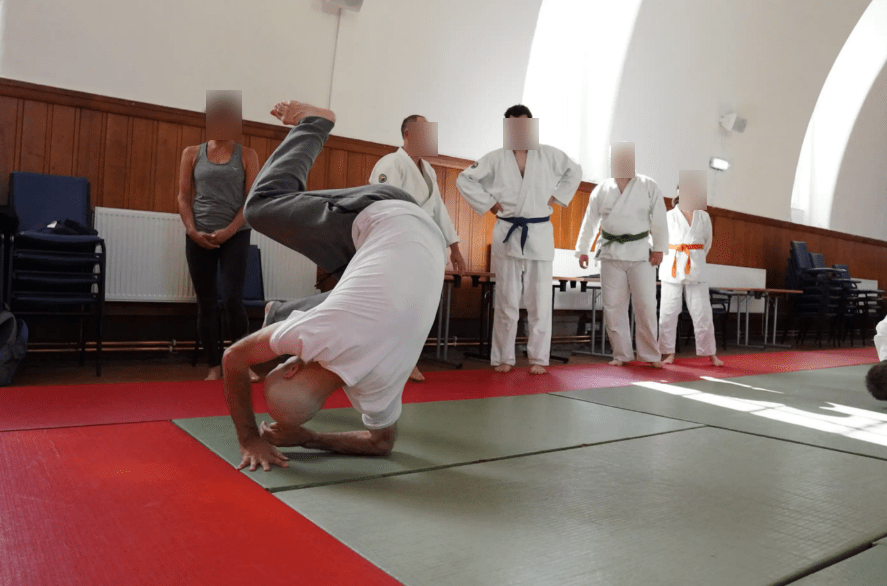
When Ben was first hooked on martial arts towards the end of his time at university, he continued to train extensively following his graduation, which eventually took him beyond Edinburgh and Scotland as a whole.
Having been out as a gay man in his home country for some time, he was used to his peers and friend groups, particularly those he trained on the mat with, knowing about that part of him.
Then came a year in Canada, where Ben had the opportunity to train with people who had different personalities, and different styles on the mat, enriching his knowledge and skills in martial arts.
A byproduct though, is that he found himself coming out to the people he met there, which was something of a throwback for him as it had been a while since it had not been common knowledge in his peer groups.
He said: “I’ve trained with a lot of different people since I started. I’ve gone to seminars. I’ve lived in Canada for a year, so I trained over there.
“My sexuality came up about seven months into that – one of the instructors asked: ‘Do you have a girlfriend back in the UK?’ I was like, ‘of course not, I’m gay’.
“I’d been so used to everybody knowing that I’d kind of forgotten that I was in another country where the people in my life didn’t know that. There was a little hush on the mat – it was apparent that nobody there had even remotely considered that that would be the case, and they hadn’t had an LGBTQ+ member on the mat before.
“There was a little friction as people wondered how they would deal with it, but it turned out absolutely fine. With Canadians, the stereotype is true: they’re super nice.
“They weren’t going to give me a hard time about that. I’d been training with these guys for seven months. We were all friends.
“Growing up there were groups of people who would just not speak to me anymore, but that always just made me think ‘well, in that case, you were never really my friend in the first place because my friends wouldn’t dump me over something like that’. It was their loss because I’m an awesome person.
“Coming out in Canada was similar in that I was going along to their club, I was training at their club, I was learning from and supporting them. If they had gone ‘we don’t want you on the mat’, I would have said fine, I’ll go and find somebody else who does, because I know that there will always be somebody who does.
“The initial friction was just a momentary thing, I think genuinely it was just a new experience for them. I’ve had to come out to lots and lots of people, so I’m very used to it.
“You are always coming out to people all through your life. You’ll always meet people who make the assumption that you’re straight and will ask about your girlfriend or wife, so you have to assess how well you know the person and how comfortable you are in the environment.
“When I first came out to my parents, that didn’t go well at all. We didn’t speak for a couple of years after that, and it took a long time to smooth things over there.”
Now in charge of his dojo, Ben has built a community where those who have gone through turbulent times, be it with family troubles or otherwise, can blow off steam around people who are tolerant and accepting.
Backwards attitudes encountered in the past have been quashed over his time as a member, and now the chief instructor ensures that any type of discrimination is nipped in the bud.
Even now, in 2026, that negativity can still be easy to find. Ben, even as someone directly affected by this unfortunate fact, wants to be an example to people instead of ousting those with harmful biases altogether – which perhaps speaks a lot to how teaching has shaped him in over 15 years in charge of the dojo.
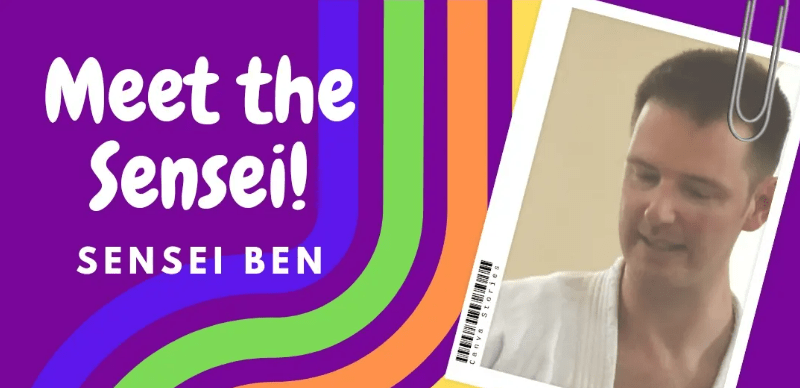
He said: “I would suggest probably about a quarter of our regular members identify as LGBTQ+. The other two thirds to three quarters are heterosexual and are allies just by the nature of the club.
“We have transgender members and we’ve done our best to make sure that there are gender neutral spaces and everyone is comfortable with where they’re changing.
“When we’re training, we don’t really have a gender split. It’s a very inclusive environment. Hopefully that comes across without my feeling the need to say I am a member of this community. It just comes out more naturally later on in conversation.
“I never, ever felt uncomfortable as a gay man attending that club even before I took over. My instructor is a heterosexual man, has a child, but he’s definitely a little on the camper side.
“There were lots of people who assumed that he was gay, because that’s what people do when you have a slightly femme-presenting straight man, even when he said he had a girlfriend and a kid.
“Where we used to train had a caretaker who was not very politically correct, and when I took over the club from my instructor, the caretaker said it was nice to have a straight person that he could talk to about things. I just thought: ‘you’ve got this so wrong, it’s the other way around!’
“I think because my instructor did have that element to his personality, it made it more inclusive and less threatening. Our focus has been so much on inclusivity, and not everything works for everybody.
“Some stuff works if you’re a 6’4 guy who’s really built. Some stuff works if you’re a 5’1 girl. It’s all about what’s going to work for you specifically.
“Part of our inclusivity is the inclusivity of physical shapes and sizes. It doesn’t matter, there will be something that will work for you. That kind of naturally just progresses through to anyone being able to do this and it should be open to anyone.
“People will generally gravitate towards a club that they identify with. They don’t have to be LGBTQ+, but they do have to be accepting of that, inclusive of it.
“The guy that I was talking about before was literally the caretaker of the building that we rented at the time. We now have our own venue and I’m the caretaker, so that’s not a problem at all. It’s different when it’s on the mat, because being on the mat is very much about representing our club, and we don’t tolerate attitudes like that.
“Anyone is welcome to try it out. The philosophy that we’ve had generally is you can have those opinions, but you do not demonstrate them on the mat. Any kind of negative behaviour is challenged when it’s happening.
“I don’t police people’s opinions when they’re off the mat. What I do hope is that those of us who have been at it for the longest time serve as role models so that people could think ‘actually, Ben is very accepting of X, Y and Z. I should be too’.”
Ben has managed to educate and befriend some of those who could have been seen to hold questionable views. There have been situations, though, where he and the dojo have been presented with individuals who proudly showcase extremely alarming views.
Handling these situations is part of his job as chief instructor, and on one such occasion that sticks out Ben took the high road in an attempt to help somebody that he thought might have just fallen down the wrong internet pipeline and could use some help.
He recalled: “At the time, one of the ways to enquire about the club was through Facebook. People would contact me on Messenger, I would tell them when we’re open, and one of my junior instructors would often just follow their Facebook profile to see what kind of person they were.
“We had this one guy show interest in joining whose Facebook profile was dubious, to say the least. There was quite a lot of swastika imagery and white dominance kind of stuff.
“I thought ‘oh my Lord, what is this guy on?’ It was a really difficult moment for our members. A lot of them said they wouldn’t train with him.
“We are an inclusive club and there are people in the club who are obviously transgender and people in the club who are of different ethnicities.
“If he genuinely is as racist as he says, he isn’t going to want to train with us because we represent everything that he thinks is wrong with the world. So I cautiously decided to give him a training session.
“The outcome of it was that he said he really enjoyed himself and he really wanted to come back, but he had some medical things that he thought would make it really difficult for him to do, so he decided not to.
“Now, that might have been his excuse for getting out of that without saying he was racist and didn’t want to come back to a club that clearly has lots of people he didn’t want to train with.
“I just think a lot of people who are like this just go into tunnels because they just don’t have any exposure. They’re just often lonely and only see things online, whereas if you actually go out and train with people who are LGBTQ+, of different ethnicities, you’re socialising.
“We go to the pub after a session, and you might start to realise that actually maybe the thing you’ve been told isn’t true and the world isn’t that much of a terrible place, and people are just people.
“Had there been a moment on the mat when he then said something, I would have said, look, we’re tolerant of everything except intolerance. You get one more chance. If it happens again, I’m just going to have to ask you to leave.”
Edinburgh Jitsu offers free taster sessions to anyone who wants to give martial arts a try.
Beyond the free sessions, there are options available to continue training at the dojo for people whose finances would otherwise prevent it.
Ben keeps the door open to anyone who is interested in sharing his love of martial arts, adding: “The first two sessions that we give are always free so that people can try it out and see what they think of it. If they don’t like it after two sessions, it’s not for them and that’s absolutely fine.
“I never ever want finances to be an impediment to somebody training, so if somebody thinks ‘I’d love to do that, but I just can’t afford it’, they can just shoot me a message.
“Our low-wage scheme is £3 per session, but if that’s too much then just get in touch and we’ll work something out because I’d rather have someone on the mat learning, training and getting a useful skill.”
 Pride of the Terraces
Leave a comment