The start of 2026 saw some of the biggest names in entertainment descend on rural Scotland in a celebration of LGBTQ+ culture.
Out In The Hills, created by Alan Cumming and curated by Lewis Hetherington, saw the likes of Sir Ian McKellen, Graham Norton, Russell T Davies, Val McDermid and Jackie Kay arrive in Pitlochry for a combination of performances, interviews, discos and ceilidhs.
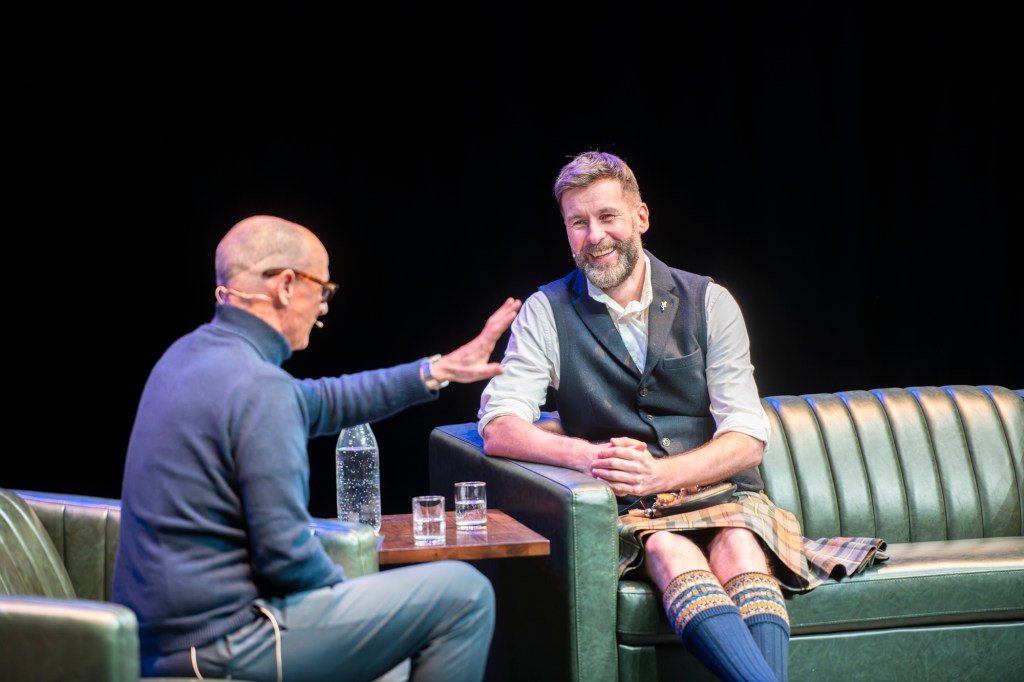
Right in the middle of the festival, though, was a focus on sport. Kicking off day two was Match Of The Gay, featuring Scotland’s first out men’s footballer Zander Murray and former Scotland international Amy McDonald, who currently works behind the scenes for the Premier League.
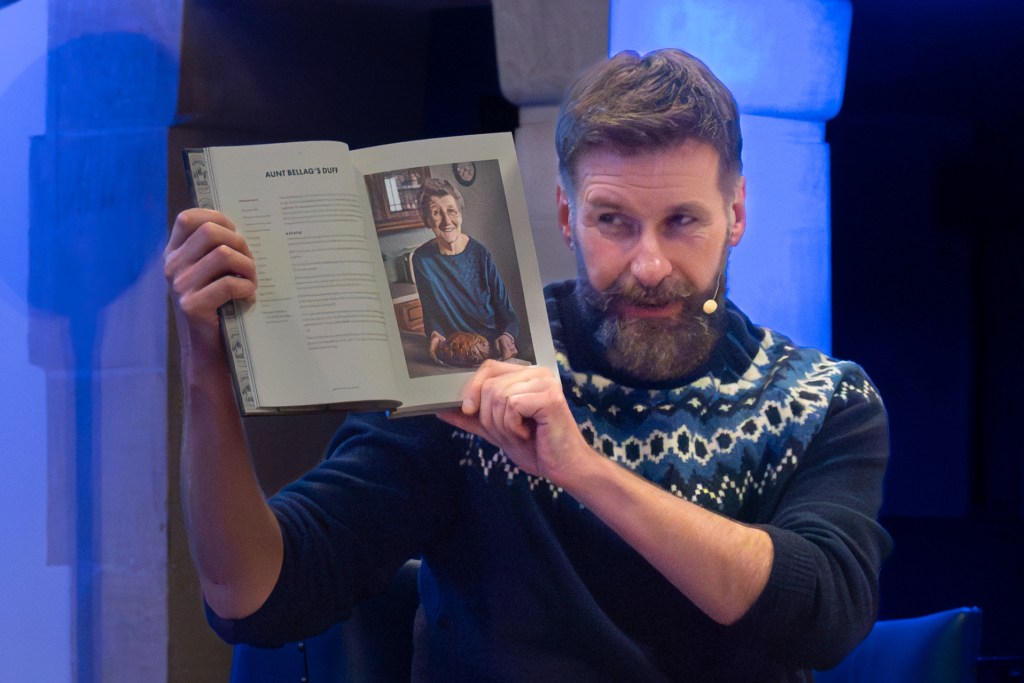
Joining them, though, was a potentially surprise name in the form of Coinneach MacLeod – also known as The Hebridean Baker.
MacLeod was approached to appear at Out In The Hills in his baking capacity, but for years his day job has been in sport – working with his boyhood club Celtic before moving on to the Scottish FA, FIFA and then UEFA.
It was MacLeod, seeing what else was scheduled for the weekend, who pointed out that he could contribute to the Match Of The Gay discussion, and he was delighted to see sport being recognised in what will surely be one of the highlights of the year for everyone in attendance.
“If I wasn’t involved in Match Of The Gay, I would have been there in the audience,” MacLeod said.
“I would have been so excited to see what Zander and Amy were going to say, so the fact that I was involved added a lot for me. Me and Amy were technically at Celtic at the same time, but we never met, but we have kept in touch since Out In The Hills which is really special.
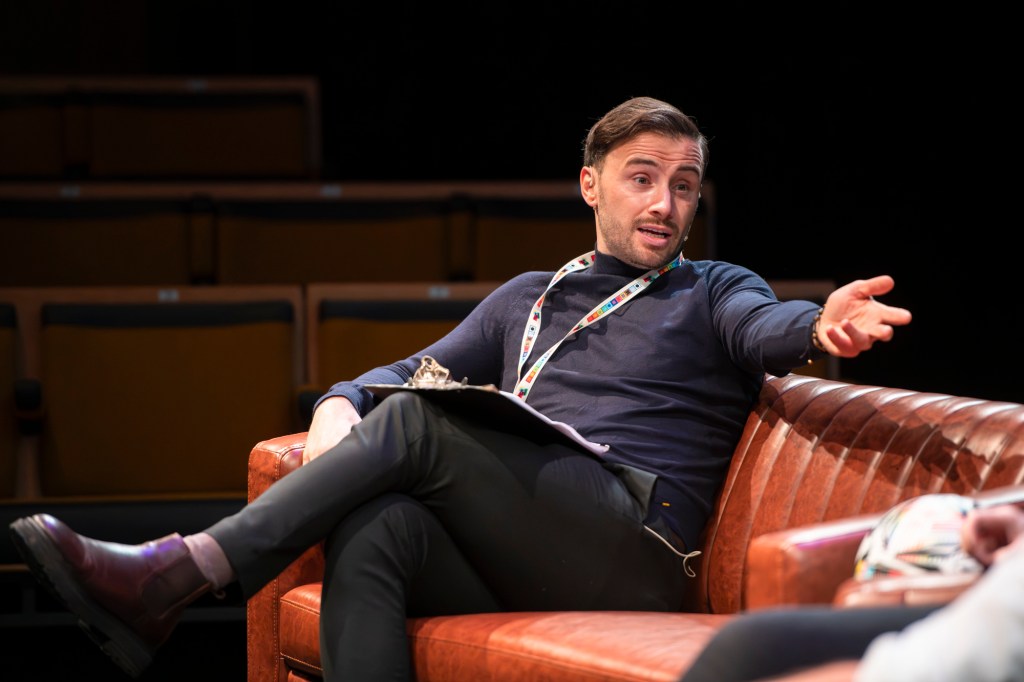
“Where else would you find an event where Sir Ian McKellen is doing a solo play, I’m talking about doing dance routines to Samantha Fox on roller skates and Graham Norton is telling amazing stories – there is nowhere that had as much contrast in the world as that weekend.
“I got a midnight WhatsApp from Alan Cumming asking if I fancied being part of a queer festival in Pitlochry in January – I never expected to see all of those words together.
“It didn’t even take me five seconds to reply, so from that moment the excitement and interest around what it would be was amazing. I knew I was going to do my own event, but Lewis told me what else what going on and I told him I had a sporting background too – a lot of people don’t know that part of my journey.
“There were lots of familiar faces and lots of new faces, and I met some amazing people. I had some pinch me moments too – I was in a green room with Sir Ian McKellen, Graham Norton, Alan Cumming, Jackie Kay and Val McDermid as though that was totally normal for me!
“It was absolutely fantastic, and I felt really lucky to be a part of it. If I’m involved or not, I hope it continues for a long time.”
Making things all the more impactful for MacLeod was the fact that Out In The Hills took place in rural Scotland.
Having grown up on the Isle of Lewis off the west coast, it was not easy growing up as part of the LGBTQ+ community. MacLeod admits he hid who he was as much as possible for a long time to try and fit in, but now he can be a role model for others who reach out to him to tell him that his story gives them confidence.
That idea of conforming seeped into MacLeod’s involvement with sport too. At Out In The Hills, he told the story – somewhat in jest – of moving to Moscow because he felt anywhere in the world would have been better for him in that moment than the Hebrides.
He also recounted walking up to Celtic Park for his first day at work, and deliberating how open to be, only to make the split-second decision when the doors opened that he should hide his sexuality.
MacLeod had attempted to become a referee at university so that he could stay involved with the sport he loved, but the abuse he received – as many referees do – was a big part of the reason he gave that up. He was unwilling to risk a similar situation developing at Celtic.
However, he would push through the discomfort and deception, and when he moved on to work with the Scottish FA he would come out – feeling a weight lifted off his shoulders.
“Throughout my whole life I knew football was where I wanted to be – albeit I had to find my place in it,” MacLeod reasoned.
“You get called slurs on the pitch as a player or as a referee, and that is going to put you off. Why would you persevere? You don’t need to, but I wanted to because I wanted to be in the sport. It was very much a personal thing for me, and I’m obviously very pleased I did.
“I’m a great believer in sliding door moments, and that sort of kept happening to me in sport. I just felt there was a little bit of destiny – not to sound too dramatic – that helped get me into my right place, and I’ve had an amazing time.
“Yes, at Celtic I had to sneak back into the closet from Monday to Saturday 9-5, but that made it even better when I did join the Scottish FA and I was more comfortable with myself.
“I know many people will recognise this – I tied myself into knots trying to remember what fake stories I had told people. It absolutely does stifle your creativity, your enjoyment of life, and you don’t realise how much until you allow yourself to be a bit freer.
“At the Scottish FA, there were a couple of situations – and if I knew about one there were probably a lot more – where a few jokes were said about me, but I know it was the right decision. It just made everything easier, I think that’s the best way to describe it.”
At various moments throughout his time with the Scottish FA, MacLeod would receive quiet moments of support from then national team managers.
During the Match Of The Gay discussion at Out In The Hills, MacLeod highlighted two moments that meant a lot to him where former Scotland bosses Craig Levein and Gordon Strachan showed that they had his back.
“Isn’t it great that there isn’t a need for everyone to shout about it, but they can still quietly make a difference?” he continued.
“What was interesting was that when I left Match Of The Gay, a lady who worked at Hearts came up to me and said Craig showed exactly the same support to her at Hearts in a slightly different situation, and I was like ‘wow’.
“It was a long time ago for her, and a long time ago for me, but it is still etched there for both of us, which shows you the impact it had.”
Towards the end of 2025, MacLeod would leave the Scottish FA to work for the International Basketball Federation, but having spent so much of his life as a fan of, and then working in, football as a gay man he is well-placed to comment on how much progress has been made in the men’s side of the game.
“I think what has happened in sport is reflective of the world as a whole to be honest,” MacLeod explained.
“At Out In The Hills, Graham Norton talked about feeling like we had fought these battles already and that we were done with this. We are now fighting to keep what we already thought we had, and certainly when it comes to the trans community in football, for me there is a sense of disappointment in what the Scottish FA has done over the past year or so.
“I’m not sure I feel the environment is any healthier, on these shores anyway. I’m not sure if what has happened politically over the last couple of years would have made a player think their community is more comfortable with them being LGBTQ+. If it’s not the same, I think we’re going a little bit backwards.
“I know what it feels like to represent a community, whether that be the islands, or Scotland when I’m overseas. When you have got whatever status I have, whatever platform I’ve been given, you do definitely feel aware that your words mean something.
“There is absolutely an awareness from me that I am representing, and when it comes to a football that is a double decision – a personal one, and a decision about how it might impact them on the pitch.
“I’ve maybe been a little bit shielded from social media comments for a while, but there was one after Out In The Hills that had loads of them, and every other comments was saying ‘stop shoving this down our throats’. Come on, give us a break.
“If I was a player, I might say coming out was just for me and I wasn’t going to do any media. Some people in the country would say that’s how it should be, but others would say we need their voice. That’s a challenge for both sides.”
February is a notable month for the LGBTQ+ community as it is history month, but in a sporting context it also sees the return of the Football v Homophobia campaign.
For 2026, MacLeod has one simple wish for the campaign: that it becomes more visible.
“I would just love for it to be seen,” he stressed.
“I think clubs have maybe felt that they can step away from it, because other clubs are doing that.
“It does come from our biggest clubs and the federations, so if Celtic aren’t doing it for example, Rangers might not, or if the Scottish FA doesn’t encourage it.
“It comes from the top and trickles down. Sometimes if you do it, you just have to accept that you shouldn’t look at the comments.
“I spoke to the guys at the St Johnstone Supporters’ Group after Match of the Gay, and they only have a few people but that few can make such a difference.
“When I moved to Glasgow, and I stood in the jungle as a Celtic fan in 1992, I wasn’t out then but I fast forward a few years and think about how amazing it would have been to go to the football and meet other guys and girls who have that common thread.”
Another sporting connection for MacLeod, as well as his time behind the scenes with Celtic, the Scottish FA, UEFA and FIFA, and now with FIBA, is his work with Leap Sports, who operate the Football v Homophobia campaign in Scotland.
MacLeod was on the board at Leap for five years, and it is another part of his life he looks back upon very fondly.
“I was a board member at Leap Sports for nearly five years, and it’s an amazing organisation,” he added.
“The team there works so hard to position sport as a positive thing for our community – because many people will have had a negative experience at school or in other environments – and Leap provides a safe space.
“They also talk to our federations and clubs, so their role is unique and interesting. There is so much for them to do, but they’re a great bunch.
“When you’re a board member, a lot of it is about governance, so it’s maybe not the most glamorous parts of the organisation. I hope my presence made a difference, because I did workshops with the team in the beginning to teach them how to use marketing well, given my day job.
“I learned a huge amount too, particularly from the points of view of trans people in sport. That was probably my first time understanding the positive impact it can have for trans people if done correctly, so that in itself was amazing.
“There were two trans women on the board when I was there, and seeing them thriving as a result of what they were actively doing in their sports, gave me a nice burst of pride.”
 Pride of the Terraces
Leave a comment