
In the immediate aftermath of the COVID-19 pandemic, football lovers were chomping at the bit to have a ball back at their feet and a kickabout with mates. The world of sport faced huge changes across the board from before Earth was knocked off her feet.
What this meant was that a lot of people’s beloved organizations for recreational sport – places where they felt at home – were almost unrecognisable due to changes that had taken place over the Coronavirus period. Some simply ceased to exist.
Women were disproportionately impacted by this. Men’s football leagues are commonplace and sometimes, unfortunately, people see them as the ‘default’ for the beautiful game, but women’s football is still growing at all levels. This culminated in some girls and women who share a love of playing struggling to find somewhere to do so after the dust had settled on the pandemic.
In Glasgow, someone decided to step forward and create a space for women to enjoy football again after so long sitting at home.
Julie Richard was feeling the football itch more than ever in 2021 and wanted more competitive play in recreational women’s football post-Covid. Mainly by herself at the start, she founded what is now known as Glasgow Community Football League (GCFL).
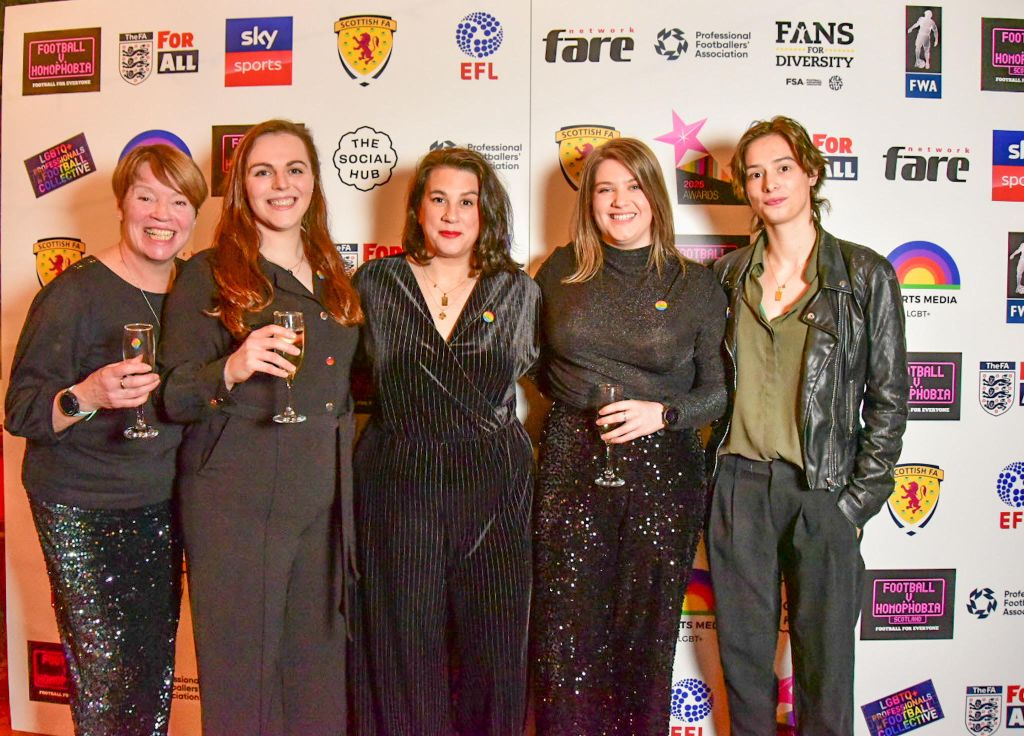
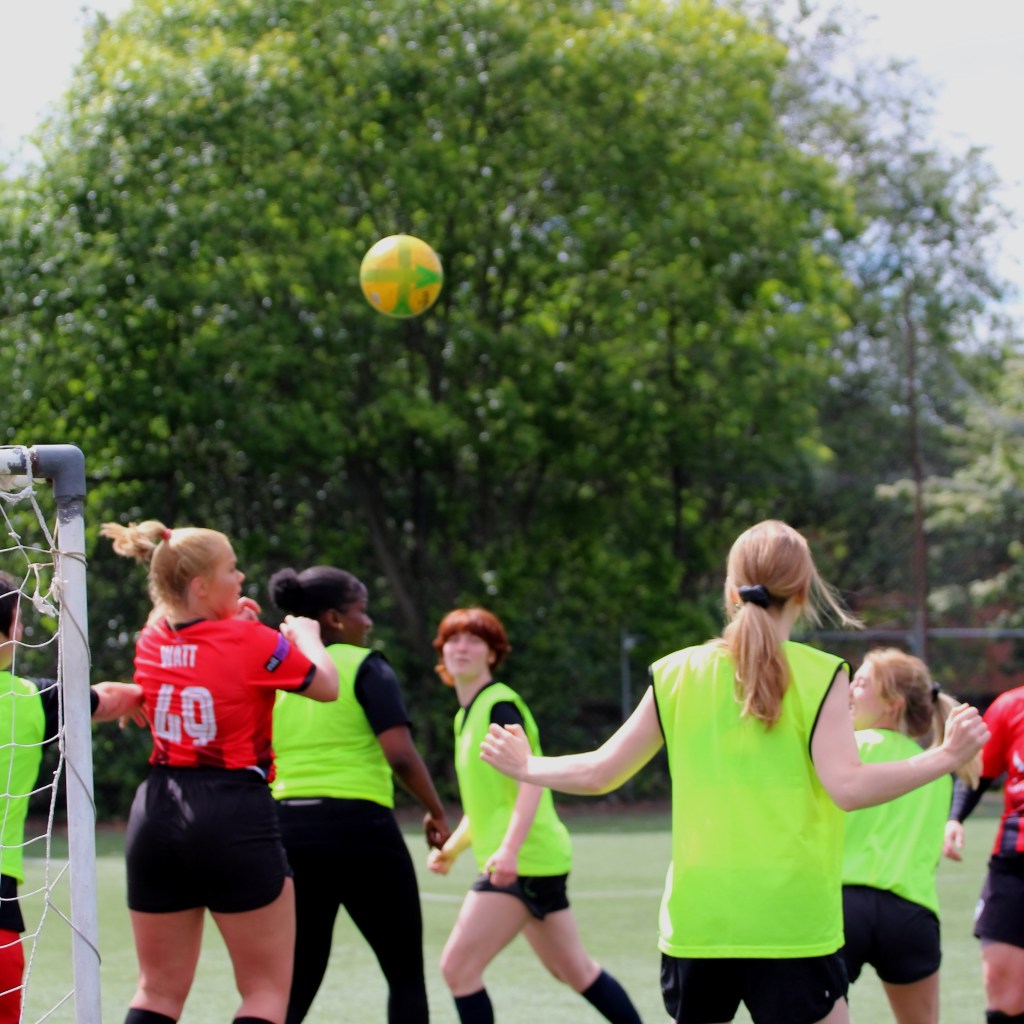
The league, which proudly has LGBTQIA+ inclusion at its core, is currently in the midst of its Autumn 2025 season, and takes place over the course of four weekends.
Richard loves to play football, but nowadays, running the league off the park is keeping her busy.
“I used to play football before Covid and we created our own mini tournaments with other teams we knew, but it was nothing official,” she said.
“After Covid, when it all started back, I selfishly wanted to create a more competitive platform for recreational teams to play in, because I’m very competitive and enjoy that, so I set it up.
“It used to be tournaments held in one day, and at the end of the day, you’d know who had won. Now, because it’s just so big and there’s so many teams, we have to do it over four or five months, so it’s more like a league now than a tournament.
“It was originally just for me to play, but ironically, I’ve not played! I think I’ve played 20 minutes, because I’m organising and running around, and it’s just not going to happen. It’s great to watch other people play and enjoy it now.
“We’ve got another three people that help (run the league). There’s Zoe, my daughter, who’s kind of on and off but helps with the financial aspect as our treasurer.
“We’ve got Aimee, who plays for Queen’s Park Strangers and usually helps on the day with any tasks that need to be handled in between, and Gillian who does more of the admin stuff – she plays for Glasgow Pride.
“We’ve got Karen as well, who also plays for Queen’s Park Strangers. She was roped in. She came in and said ‘oh, can I help when we’re at the table’, and next thing she knew she was added to the WhatsApp group. I know she loves it really.”
Though GCFL was always an inclusive place for all, it was not initially run with this inclusion as its very focal point, as it is now.
As time passed, Richard and other volunteers who helped to run the league began to notice a lot of the feedback that they received surrounded LGBTQIA+ inclusivity.
It had become clear that there was a real opportunity to build something special – and those who gave this feedback were the engine that made it happen.
No time was wasted in taking this chance. Richard’s main course of action as an ally was to allow LGBTQIA+ players and volunteers to make the decisions on what to change about the league. As the founder, making sure the players and volunteers all felt supported in what they implemented alongside her this was crucial.
“I realised that we had a chance to show the LGBTQIA+ community that they had a safe space to play,” she reasoned.
“More and more players were just chatting and getting feedback and seeing what they wanted as well, because it is a community league.
“I felt like it wasn’t for me to decide. I very much learn from the players and listen to the feedback. Sometimes we get great ideas – at the beginning, we weren’t called Glasgow Community Football League, we had a different name that wasn’t maybe as inclusive, and somebody asked if we could try to make it inclusive which I was absolutely happy with.
“I’ve been trying to evolve and really listen to people and listen to what they have to say and make it their community league, as opposed to me deciding what I want to do.
“It’s always been inclusive, it just maybe wasn’t as obvious as it is now. We’re quite happy to say that we’re the only 7s league that allows trans players to play because that’s really important at the moment.
“We’re there to support them. We’re happy that they have somewhere safe to play.”
Something important to GCFL is that every team that wants to join the league is made aware in no uncertain terms of the conduct expected of them.
This simply acts as a line in the sand that says that all are welcome, and new teams need to help maintain the safe space the league has created.
“We make sure that when we have new teams joining, we’re really clear on what the expectations are,” Richard stressed.
“We’ve done a code of conduct – a safe space policy, we called it. Everybody has to read and sign just to make sure that everybody’s on the same page.
“People make mistakes and things happen. It’s about what we do when that happens and how we educate other people to be more inclusive, and to understand that they’re playing in an inclusive space and to behave as such.”
These safe spaces, and the rules in them, are important in a time where marginalized groups, particularly trans people, are being scrutinized from all angles in the media.
It’s not just from fringe right-wing outlets. Harmful rhetoric is being spouted from household names and clouding the average person’s perception of the trans community, which has culminated in trans women no longer being able to take part in women’s football in the UK.
This is not a decision that has been taken only at professional level – it has trickled its way down to recreational leagues that are supposed to be there only as a source of friendly, casual fun and community.
For the GCFL, and Richard, this is a major source of anguish, and they have made very clear that when they say all are welcome, they mean it.
“In Scottish women’s football, run by the SFA, there was only one trans athlete that happened to play, but it doesn’t matter whether it was one or none – you’re preventing a group of people from playing,” she insisted.
“People are just people. If you want to play football, play football. It’s good for your body. It’s good for your mental health. It’s good for everything.
“I don’t understand why we’re so scared of trans athletes and how it might affect the game. It’s not, it’s making it better. I think women’s football has always been based on inclusivity more than men’s football.
“I think it’s going against the grain to ban trans athletes in women’s football. If you speak to a lot of players, they don’t agree with that. They don’t think there should be a ban, but it seems to be a trend at the moment in the world, unfortunately.
“It’s devastating on a personal level for trans athletes. People that are putting the ban in place don’t realise the effect it’s having on players and the fact that they are cut off from a community.
“If you play a team sport, you know what it’s like. It’s not just playing the sport, it’s everything that’s around – the support that you get from your team. If you’re cut off from that, it just makes it really, really difficult as a trans player to feel like you’re fitting in somewhere.
“It’s friends for life, it’s support groups, it’s somebody when you’re not having a good day, when you’re feeling down, and you turn up for practice, who is going to make you feel better and make you feel good.
“That’s really, really important, especially with all the issues surrounding mental health, and I think trans athletes in particular need that because they sometimes feel so excluded at work or in general life that they need that safe space where they can be themselves.”
Thankfully, Richard and the likes of Zoe, Aimee, Gillian and Karen, alongside the other volunteers and many players involved in the league, have managed to cultivate an atmosphere that is enjoyable for all who are involved with the GCFL.
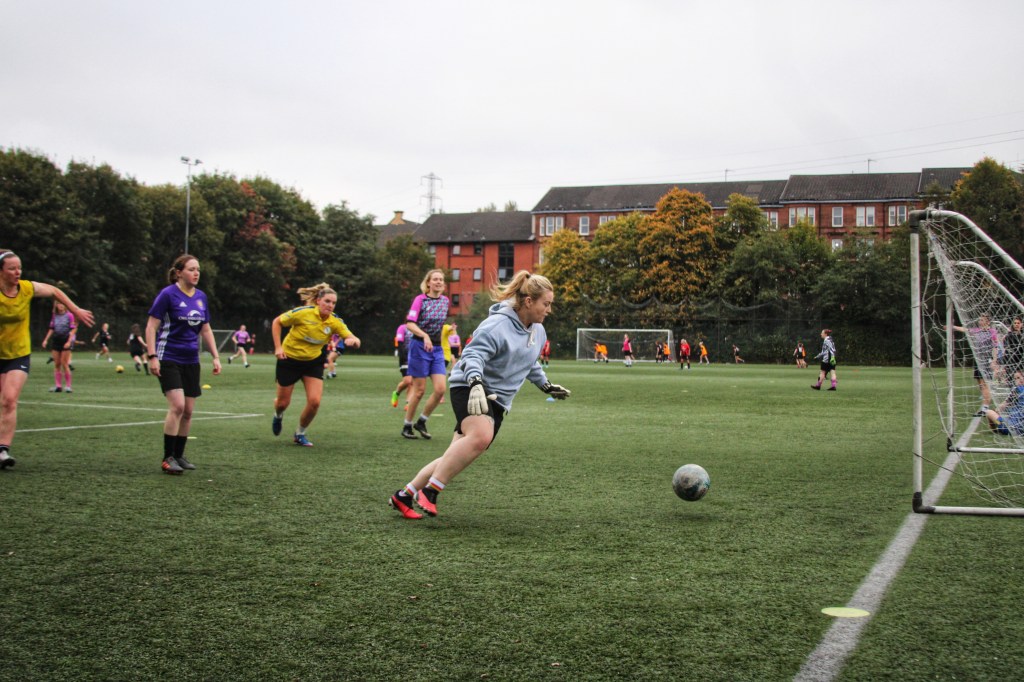
This has been reflected in the sheer numbers of teams and people involved. In the current Autumn season, there are two leagues – the Thistle League and Clyde League. There are 16 teams in total, eight in each league, all with their own badges and aesthetics.
For Richard, who isn’t part of the LGBTQIA+ community, seeing the league unfold in front of her eyes and the way the people in it rally around each other has made clearer the importance of allyship from all people.
“You’ve got a lot of people from different walks of life, different genders, different sexualities, and I think it’s a great place to be because then you realise you’re accepted – whether you’re straight or gay, it doesn’t matter,” she continued.
“Recently, I was speaking to somebody from Leap Sports Scotland, and they were asking me a question. I said ‘I’m just an ally’, but she responded ‘there’s no such thing as ‘just an ally’.
“Being an ally means you allow somebody to be themselves, regardless of what that is. It’s really important to have an ally in those spaces and not just have people that are non-binary, gay or trans. It’s important to have straight people as well, because then it’s not just this group and that group, it becomes everybody.
“It’s just nice to look on the pitch and you’ve got people of different races, different religions, different gender, different sexualities, different ages, and it doesn’t matter.
“For me playing football, it can be quite intimidating if you’re surrounded by 16-year-olds, but actually in that community there are people that are older than me, there are people that are younger than me, and it doesn’t matter anymore.
“I always think, let’s be competitive, but let’s have fun – let’s really enjoy ourselves.”
Enjoyment, among everything else, is largely what makes GCFL so successful. Recreational football has a different kind of inclusivity drawback though, in that it can be expensive for people to take part in the first place.
Add this to the current cost of living crisis, and someone could be forced to forgo their beloved hobby to give themselves more resources for the bare necessities.
This was a hurdle to overcome for GCFL, and recently, they have managed to ease the burden on their players who need it thanks to help from different sources.
“We’ve managed to get some grants from Glasgow Wellbeing fund,” Richard added.
“That means we’ve been able to reduce our fees and we’re getting sponsored by Glasgow City, the women’s team, as well. They’re hoping to help us become more financially inclusive so that if people can’t afford to play in the tournament, it’s free for them.
“We just charge the minimum fee we can afford to make people pay to keep it running.”
Glasgow Community Football League are active on Instagram and regularly post information about happenings in the leagues @glacommunityfootball. They can also be found on their website.
 Pride of the Terraces
Leave a comment