Many LGBTQ+ people will feel a sense of isolation, making community spaces and activities all the more important for their well-being.
Sport’s benefits in that sense are well-documented, but not everyone is fortunate enough to have access to a space where they feel welcome and included.
In those cases, it needs someone to light a spark and create something. That is exactly what Ritchie Currie-Jenkins did with Rainbow Warriors.
Approaching its first birthday, the group is part of the Stenhousemuir FC Community Foundation and provides a place for LGBTQ+ people and allies to play football, make new connections and find a home away from home.
The idea was sparked from conversations Currie-Jenkins had with board member Linsey Paton-Donaldson last February about a lack of spaces for Ritchie as a trans man outside of Scotland’s biggest two cities. At that point, their local Pride in Stirling had not held their first event, and although there were LGBT+ Youth Scotland services on offer the upper age limit on those was 25.
From there, Rainbow Warriors was born, holding their first session on November 25, 2024. The last year has been one of impressive growth, taking part in non-competitive festivals for both the Football v Homophobia and Football v Transphobia campaigns, as well as Leap Sports’ Festival Fortnight in June, and the group can boast close to 30 regular members already.

For Currie-Jenkins, though, the best bit about launching the group has been the sense of community he has found with people he would never otherwise have met.
“We had people at the start of the programme who had only recently come out as trans or non-binary, and they had nobody to talk to about their problems,” he said.
“That’s why I set it up. Before joining (Glasgow-based inclusive football team) Gender Goals, I didn’t know any trans people that I could open up to and talk to about what I was going through, so that has been a real positive.
“It has grown arms and legs. We are constantly seeing new people coming along, and it started as a football group but we are so much more than that now.
“People have made friends and met up outside of football sessions to socialise, and we all came together for Stirling Pride this year and marched together. There is a big community all of a sudden, just from coming together and playing football.
“The scary bit is that it hasn’t even been a year. It’s quite overwhelming at times. I knew there was a demand, but I didn’t expect it to be this big, and not this quickly, so it’s really inspiring.
“It still feels like there is so much to be done too. There is so much room for us to grow, and I think what we do differently from other clubs is that we don’t just have the football session, we get a room afterwards where we can sit and chat and talk about what’s on our mind. We spend more time laughing than actually playing football – it’s very relaxed, which is great.”
Currie-Jenkins does also try to play with Gender Goals, a Glasgow-based club that was Scotland’s first football club run by and exclusively for trans, non-binary and gender non-conforming people. They organise weekly recreational training sessions and take part in an inclusive five-a-side league.
They are just one club that has popped up in what is a thriving inclusive football scene in Glasgow, but despite there being less than 30 miles from Stenhousemuir’s Ochilview Park to the league’s home base it can feel like a different world in terms of opportunities offered.
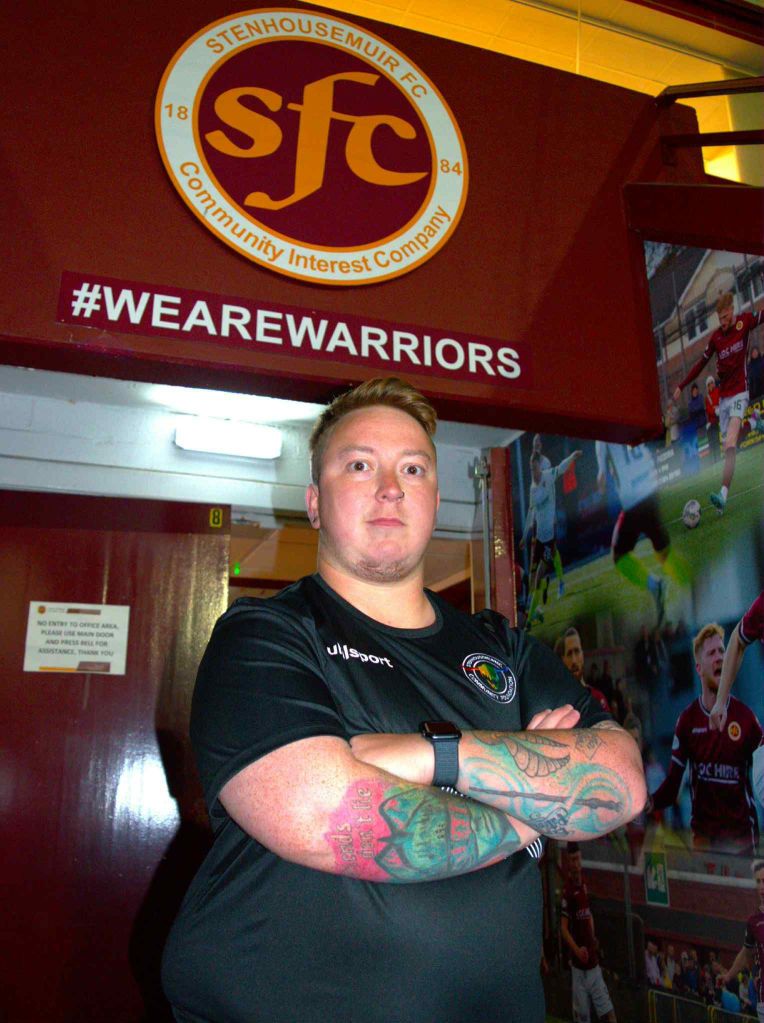
Not everyone will be able to travel on a regular basis in order to have that support and option to play inclusive football, and when you go further north regular opportunities are even more scarce.
That was part of what fuelled Currie-Jenkins to create something in his own home area, to give more people the chance to get involved in inclusive sport.
“Why should we have to travel to Glasgow or Edinburgh to be ourselves, mix in and have those diverse friendships?” he reasoned.
“There are people who live in these communities, and they need something outside of the big cities. That’s why Stirling Pride set up too, because you should be able to be yourself in your local community.
“It’s sad that it took so long to get it, but even Stirling Pride has grown and grown in such a short time. There were 8000 people there this year, which shows that people want to come and get involved in something where they can be themselves.”
While Rainbow Warriors are helping bring safe and inclusive LGBTQ+ sports spaces to new parts of the country, in Scotland it is also rare for such a group to have significant backing from their local professional football club.
Scottish League One outfit Stenhousemuir have been involved and supportive of the enterprise every step of the way, though, and Currie-Jenkins believes other clubs can learn a thing or two from how Stenny have approached the whole concept.
“It’s about education, which is why Stenhousemuir are keen to have these conversations – which need to happen – about how to be more accepting and more inclusive,” he explained.
“They want to do well, and we just have to educate them and help them make positive change.

“I think I’ve been lucky, because I was already friends with Linsey and she’s a respected member of staff as well as being part of the LGBTQ+ community, so I feel like I have someone who has my back.
“You don’t expect to have these conversations with a professional football club. You think it’s going to be that male stereotype where they won’t support you, but Stenny have been nothing but positive, so it’s been quite overwhelming.
“When we did the Football v Homophobia festival at the start of the year, Stenny invited us on to the pitch before a match to get pictures with the FvH banner, and we went into the boardroom at half time and got to meet some of the players after the game. That needs to happen more.
“You see groups at English Premier League clubs like Liverpool and Manchester United, and they get a lot of hate and backlash, but these things need to happen. There needs to be club engagement with the fans and these communities.
“Other clubs can look at what we’ve done and realise there is a demand for it. They shouldn’t be naïve and think they won’t have that where they are. I think if you have the right people behind it these clubs can pop up all over the country – I would to be able to organise friendlies and maybe even get a league going – they just need to have the drive and want to actually do it.
“They also need to be prepared that not everyone will be supportive. There will be people who make a few comments, although we’ve been quite lucky and haven’t actually had to deal with much. I think the club shelter us, because we don’t hear much and we know we have their backing.”
While the Rainbow Warriors project has taken off over the last 12 months, it has been a significant few years for Currie-Jenkins on a personal level too.
He only came out publicly as a trans man in August 2023, a few months before having those initial conversations about what would go on to become Rainbow Warriors, and itself only shortly after marrying wife Jen.
Given the current landscape for trans people in the media and political spheres right now, it has not been an easy start to his transition – particularly when so much of the conversations revolve around trans women, leaving many trans men feeling invisible.
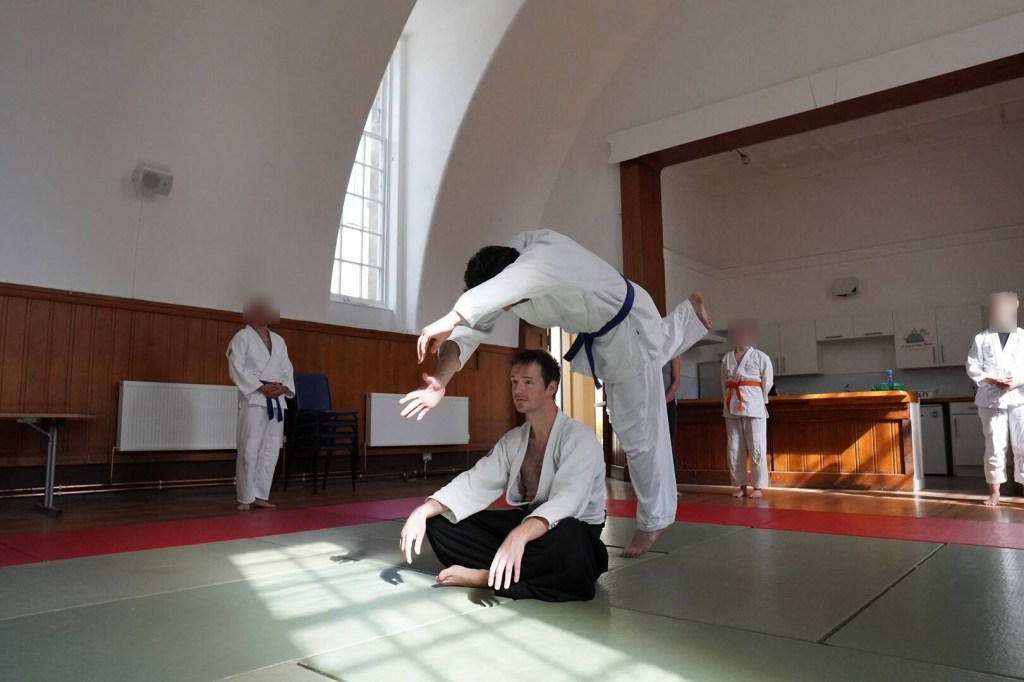
“I’m fundraising for top surgery at the moment, and that’s a very slow process as you can imagine, so I’ve done things like abseil 418 feet down a tower in Nottingham to show that I can push myself – but living as a trans man in today’s society is scary,” Currie-Jenkins admitted.
“We’ve got our challenges, even around whether we will be safe going to the toilet, and I’m trying to push myself to believe that I can actually go and do that but it’s not easy. There are definitely places where I feel more comfortable, Stenny being one of them, and places where I don’t.
“I feel like people forget that trans men exist. When people think about trans people, they instantly go to trans women. That’s actually really sad.
“People are totally focused on the toilet situation, and we have that issue too. It’s not even just trans people, butch lesbians can have issues going into women’s toilets, and they have always had that issue. I had it myself before I started transitioning, but we don’t go into toilets making a big song and dance about it like other people think we do. I don’t know why we would.
“There is still a lot of education that needs to be done in Scotland and the UK in general, because we do exist and we should have a right to play the sport we love. Nobody should be able to tell us otherwise.
“Personally, I’m on hormones and I’m very aware that if I’m playing in a mixed-gender festival, there might be some physical contact, but you’re going to get that in sport. At the end of the day nobody means any harm – if we’re playing a game, we’re just playing a game.
“I need to live as myself. That’s what matters above all, but it’s not easy being ourselves in the world. We’ve just got to try and take each day as it comes and try to keep fighting.”
Rainbow Warriors is one of the things that helps Currie-Jenkins keep fighting, and it has made a big difference to his life.
Through Stenny’s Community Foundation, he is being funded to go on coaching courses – a path he never thought he would be going down, but one that he now hopes to turn into a full-time career one day.

In more ways than one, then, it is clear that the last couple of years have been completely life changing for him.
“In my journey as a whole, it’s a lot less lonely than it was because of Rainbow Warriors,” Currie-Jenkins added.
“Stirling Pride has been good for me with that too, because I’m trying to fight and do good not just for my own rights, but for everyone else’s so that everyone can have a voice and be seen and heard.
“I feel like I’ve got a community of people who respect me for me, for who I really am, and that’s why I want to see more football clubs following what we’ve done at Stenny. In the world of having mental health issues, it has been a reason to keep fighting. I don’t think I would be here without all the support I have had.
“It feels like I’m not on my own anymore. A couple of weeks ago I actually took a picture of us all together at the park – there were maybe 14 or 15 of us there – and it struck me that everyone who was there had come out to my session. That means the world to me.
“I set up Rainbow Warriors with the goal of just helping one person feel appreciated and not alone, and like they had someone they could come and speak to. That was good enough for me, but now I have this group of people who love it.
“We went to Stirling Pride and went out afterwards, and I was watching this group of people socialise, drink, have fun and dance. All I was thinking was that if I hadn’t set the group up, none of this would be happening right now, and it really hit me.
“It’s emotional – I can’t really put it into words, but it’s overwhelming for all the right reasons. I’m so proud of where we have come from and what we stand for. We exist, we won’t hide, and we will continue to fight for what’s right and what we believe in.
“We all have our different reasons for coming, but we’re all there to be part of the community, have fun and enjoy what it stands for.”
 Pride of the Terraces
Leave a comment