A few years ago, Jahmal Howlett-Mundle went viral when he became one of the few men’s footballers to come out.
While playing for Sheppey United, a video of him coming out to his teammates made headlines, but in reality that moment had been a long time in the making.
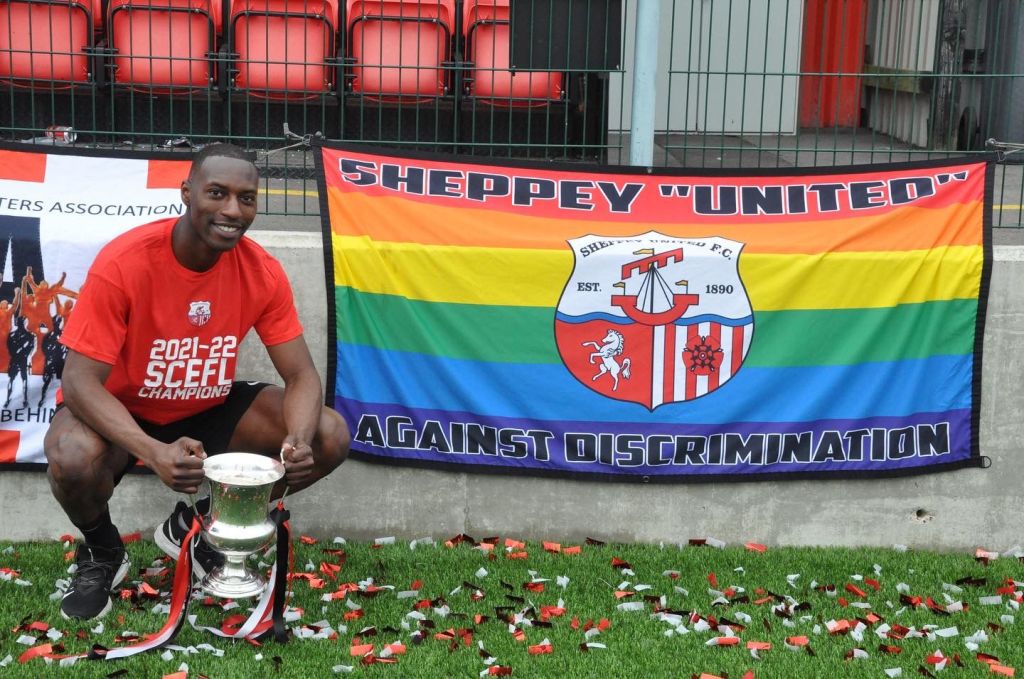
He had come out to his family at the tail end of 2019 after going through a spell of struggling with his mental health, which had led to him taking a step back from playing football altogether. Throughout that time though, Sheppey had been in touch looking to bring him into the fold, and Hewlett-Mundal was up front with them before committing to joining.
The 27-year-old defender had even given their manager something of an ultimatum – saying he would not sign for the club if the management team were not accepting of the fact that he is bisexual, but any fears were quickly eased and he signed on the dotted line.
Having reached a point in his own life where he was comfortable with his sexuality, and knew he had a support system around him, Howlett-Mundle also had the confidence to begin coming out to select teammates in March 2020, but any bigger plans were put on hold when football was cancelled because of the Covid-19 pandemic.
He was eventually able to tell the rest of his teammates ahead of the 2021/22 campaign, and his life has never really been the same since.
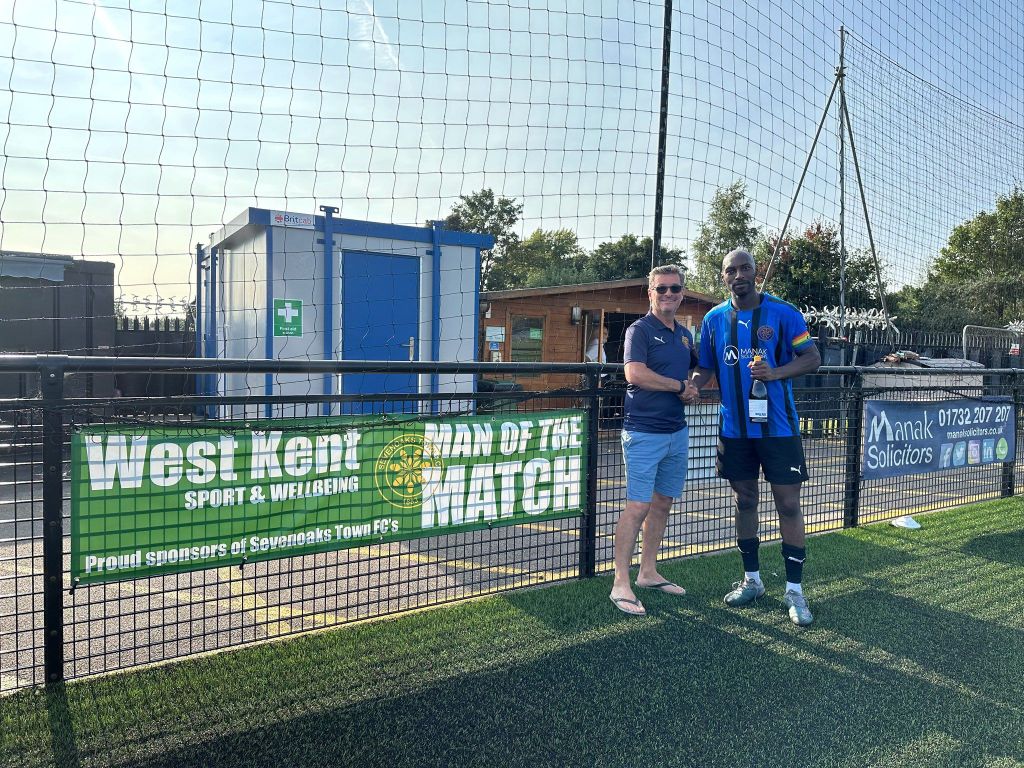
“The first thing I’ll say is that every day seems to be completely different,” Howlett-Mundle, who is now vice-captain at Sevenoaks Town, explained.
“On the days I feel up for it and motivated, I see the world in a very different way from the days where I feel physically or mentally tired, or if I’ve just had enough. Everyone goes through those trials and tribulations, so I try and wake up on the right side of the bed.
“That definitely ties into my journey as a whole of coming out, and particularly coming out in football which as a player is very rare.
“It is really difficult to put my journey into words, because the way I have been received from the football community – and also people in different sectors when I go to networking events – on the whole has been so much more positive than I might have thought.
“I don’t know if it’s just that I had a negative view on myself for so long, so I didn’t think someone else would see me as a positive role model or a positive person because of my identity, but over time I have convinced myself that it is okay to present as myself – which is all anyone wants to do.
“Don’t get me wrong, there have been a couple of lower moments, but that is to be expected whatever your identity is. There will be some people who try to attack you personally, physically or emotionally, maybe because they don’t understand what you contribute towards society, but 95% of my experience has been positive.
“Going forward I want to be a part of more education for society, and I think that will be a good thing for all of us. It’s important, because from the work I’ve done in the past when you say something and you see them have that lightbulb moment where something has resonated with them, that’s a feeling that’s really difficult to describe.”
In the time since Howlett-Mundle’s video went viral, the landscape of LGBTQ+ representation in British men’s football has changed drastically.
Blackpool youngster Jake Daniels was another to make the headlines as a second-tier player in England, while Zander Murray became the first Scottish men’s player ever to come out a few months later.
One thing that sets Howlett-Mundle apart from those two, though, is that he is bisexual rather than gay.
That may seem like a minimal difference to many, but it is important to acknowledge the different challenges that various identities face in order to prevent the idea that the LGBTQ+ community is a single, homogenous group.
Being part of extremely limited male bisexual representation in football could be a lot of pressure to put on Howlett-Mundle’s shoulders, but it is a role he is doing his best to embrace.
“The way I see it is that when it comes to tabloid newspapers especially, and the rumour mill is going about a player potentially coming out, a lot of the time the term that is used is a gay player, and that contributes to the erasure of bi people in general,” he said.
“The wording is so important, because I certainly don’t feel represented when it’s phrased as the ‘gay footballer in the Premier League that’s about to come out’. That would be amazing, don’t get me wrong, I would be one of the first people to celebrate that, but for other male bi players especially they might think they will only be validated if they are gay.
“That representation is so important, but unless it’s a really short period of time like bi visibility week I don’t really see that much. Bisexual people get a lot of stick in general, because a lot of people will see a bi male with a man as gay, or a bi male with a woman as straight. No, our identity is our identity whoever it is that our partners may be at that moment in time.
“Being known as a ‘bi footballer’ is not something that I ever take offence to. I know who I am, I know what my identity is and I know a large part of the things that I do is playing football. What I will say is that there is a lot more to me than just being a football player, or just being bisexual. My background is also in education and teaching, and I don’t step into that space saying I am a football player or I am bisexual – I just set out to do good work that will benefit as many people as possible.

“I used to be someone that would aim for perfection, and I realised that when I put something out there it doesn’t have to be perfect, it just has to be me, and that’s enough.
“I’ve recently started thinking that every single minute on the pitch counts, because every single minute that I am on the pitch represents the community. I used to discredit that, but then I realised that there have been many points along the journey where I didn’t know if I was going to make it through to the next month because of how I was feeling.
“Every time I step on to the pitch for training or to play, it could be my last day because I could get injured anyway, so I might as well just go for it.
“Sometimes my best is 10%, sometimes my best is 1000%, but I’m going to give everything I’ve got. In my eyes at the moment, that’s all I can to do be visible as a bi player and be representative of the community.”
Another thing that sets Howlett-Mundle apart from the other LGBTQ+ figures in football is his ethnicity.
Much of the representation LGBTQ+ people get in public spheres – whether in sport or otherwise – can be very white and middle class.
It is a conversation that is actively being had, with questions being raised about the lack of racial diversity in the England women’s national football team in recent years even despite women’s sport often being held up as being far more inclusive than its men’s equivalent.
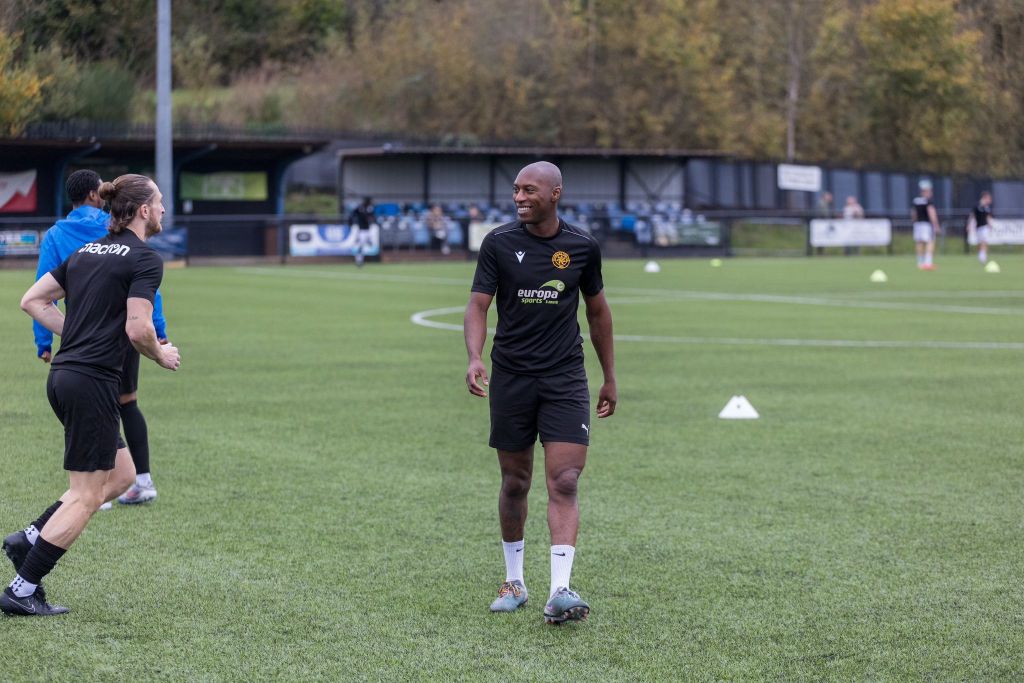
Again, though, being one of the very few people who look like him in these conversations is not something that Howlett-Mundle will let affect his desire to make a positive impact.
“I’m definitely conscious of being one of the few black people having these conversations, but it’s not something that’s going to knock me off my stride,” Howlett-Mundle stressed.
“When I walk into these rooms, I can be one of the very few black males in particular from the community, so the way I look at it is that I have been fortunate enough to be in positions where I can share my opinion and speak about not just my own identity, but have the chance to educate people.
“Whether I am one of the only black people in room or not, that’s not going to deter me in my mission to make people more aware of my community and learn from people like myself.
“Historically, the black community has had a lot of homophobia – and a lot of the time that is internalised homophobia. If you are from the Caribbean or different parts of Africa, that could be somewhere it is still punishable to be LGBTQ+.
“Laws are changing, and slowly but surely people are starting to realise that people from the LGBTQ+ community can contribute massive amounts to society, so hopefully we will continue to see shifts in those areas of the world.
“I like to think that in the UK we are a lot further ahead than that, but there will still be times where people will openly be homophobic. That could come from someone of any race or ethnicity, so it’s something that I am conscious of but I am also only one person.
“I would love to bring as many people through the door with me as possible whether they are from any race or ethnicity, but ultimately at the moment I am not the one that makes those decisions about who gets into those positions where they can also contribute.
“I’m not looking at it selfishly and thinking that I just need to get myself sorted, because I would love more black people from the LGBTQ+ community to have a voice, especially if that voice is going to contribute in football.
“As a black person who plays football and is openly bisexual, there aren’t many other people like me who are playing football which can be quite isolating. I like to think that I will be able to look back on my career one day and think other players have come out because they saw my journey, and were able to lean on me to gain the confidence to come out.
“That goes for everyone. I’m always here to support and give feedback – and criticise where I need to as well. If I say something that’s a bit shoddy, I want to be told about it. I’m not going to pretend everything is rosy, because that won’t always be the case, but I will be honest and support anyone I can.
“More than anything, it won’t deter me if I am one of the few black people in any space, but particularly LGBTQ+ spaces.”
Howlett-Mundle’s confidence when approaching situations where he is a sole voice in the room is a sign of how much things have changed for him personally since that video of him first coming out to his teammates at Sheppey United went viral.
He, and the others who have stuck their heads above the parapet, have become something of a source of refuge in men’s football for others who are struggling.
The hope is that his voice and influence will only grow louder in the coming months and years, and if potential projects in the works come off he expects to have plenty of time to reflect on his own journey to get to this point.
“People are so curious, because they don’t have many places to go to in a football environment to speak about the LGBTQ+ community, so they come to me,” Howlett-Mundle added.
“I like to think I make people feel welcome. My mum is exactly the same, and she is my biggest role model, so it’s natural for me to try and make people feel like there is a place for them whatever the circumstance or scenario. I feel like people have done that for me because of this particular part of my identity, which has helped.
“A couple of years ago I would never have wanted to talk about myself publicly. I used to find that really uncomfortable and intrusive, because all of a sudden people wanted to know more about me and about something that I have hidden for years. Over time, I realised that it’s because there aren’t many other players who are able to give their thoughts and opinions, and attach their experiences to that.
“I probably don’t reflect on my own journey as much as I would like to. Sometimes when I’m feeling really good I deep dive on it and go back through my calendar and see all of the events that I’ve been to, or the time that I’ve spent with friends and family, and I realise that it’s a little bit crazy.
“In the same breath though, when I’m feeling quite sad or low, I do the same thing and think I should give myself some credit because I’m doing things that not many other people have the opportunity to.
“I probably should book in some time with myself to reflect in a lot more detail, but I only do that every so often. Things change all the time – I’ve got some exciting projects that I’m hoping will come to fruition over the next few months, so behind the scenes I’m working really hard to make these things happen.
“Definitely if those things happen, I will have reflected deeply and recognised that if I didn’t come out I wouldn’t be able to do these things. Hopefully people see that I’m just a normal bloke – I just want to crack on and play football and have a good time, and being bisexual is only part of that.”
 Pride of the Terraces
Leave a comment